
Full artificial breeding of third-generation Chinese sturgeon achieved
2025-11-29 19:11:27
By Chen Si.
Scientists have bred the first batch of 12,000 third-generation Chinese sturgeon fry through full artificial propagation. This landmark achievement marks a new era for sustainable conservation and large-scale breeding without relying on wild parent fish.
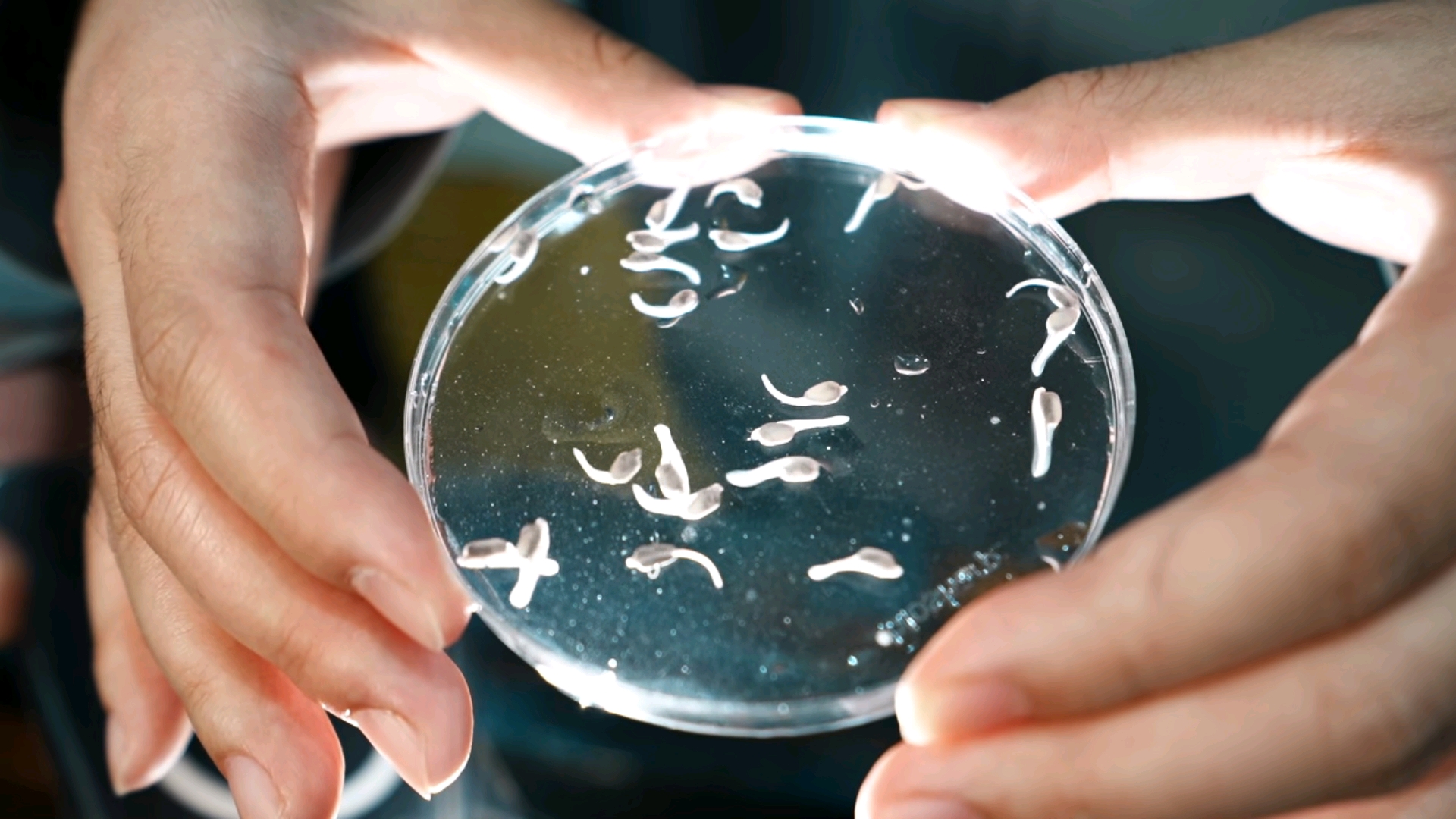
Scientists have bred the first batch of 12,000 third-generation Chinese sturgeon fry through full artificial propagation. This landmark achievement marks a new era for sustainable conservation and large-scale breeding without relying on wild parent fish.
Third-generation Chinese sturgeon fry.
The parent fish, 13-year-old females and 14-year-old males, were second-generation Chinese sturgeon independently cultivated by the Yangtze River Biodiversity Research Center, part of the Three Gorges Group.
The artificial insemination of this batch of eggs achieved a fertilization rate exceeding 95 percent. After five days of incubation, 112,000 third-generation fry hatched.
A persistent challenge has been whether Chinese sturgeon can thrive and reach sexual maturity in a controlled environment.
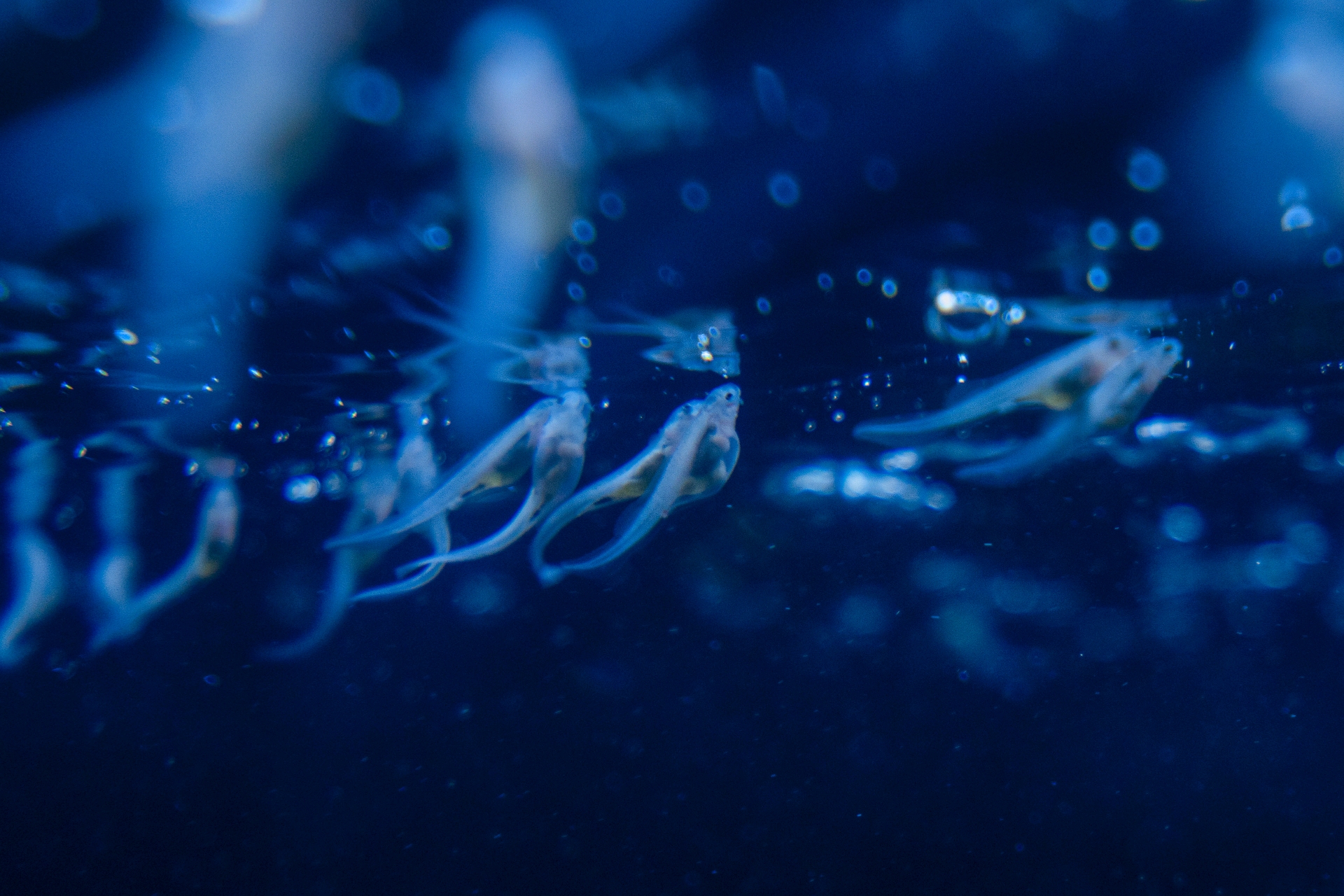
Third-generation Chinese sturgeon fry.
"The birth of the third generation confirms that the second generation of Chinese sturgeon is fully capable of maturing and reproducing in an artificial environment," said Jiang Wei, deputy director of the Yangtze River Biodiversity Research Center and chief engineer of the Chinese Sturgeon Research Institute.
In the future, mature second-generation Chinese sturgeon will replace the first generation as the main breeding stock. Developing artificial populations will help overcome the "production capacity" bottleneck, ushering in a new phase of "sustainable and large-scale breeding."
Chang Jianbo, chief expert of the Three Gorges Group National Engineering Center and director of the Yangtze River Biodiversity Research Center, noted that the research team meticulously replicated the core environmental elements of the sturgeon's complex "river-sea migration" life cycle. This involved precise control over critical conditions such as nutrition, light, water flow, and temperature, alongside stress-reduction measures.
These efforts led to the establishment and continuous refinement of a breeding technology system for Chinese sturgeon, achieving the milestone of "breeding three generations within 40 years."
Moving forward, the Three Gorges Group will use this achievement as a new starting point to develop an "artificial + natural" conservation technology system, laying a theoretical foundation and providing technical support for the recovery of wild Chinese sturgeon populations.
Han Jingwen, Xie Ze contributed to this story.