Material pipeline network at industrial park connects projects
2025-12-07 19:12:11
By Chen Si.
The Tianjiahe Area of Baiyang Industrial Park in Yichang is demonstrating how newly built utility corridors are stitching together an industry chain by linking upstream and downstream manufacturers across the park.
The Tianjiahe Area of Baiyang Industrial Park in Yichang is demonstrating how newly built utility corridors are stitching together an industry chain by linking upstream and downstream manufacturers across the park.
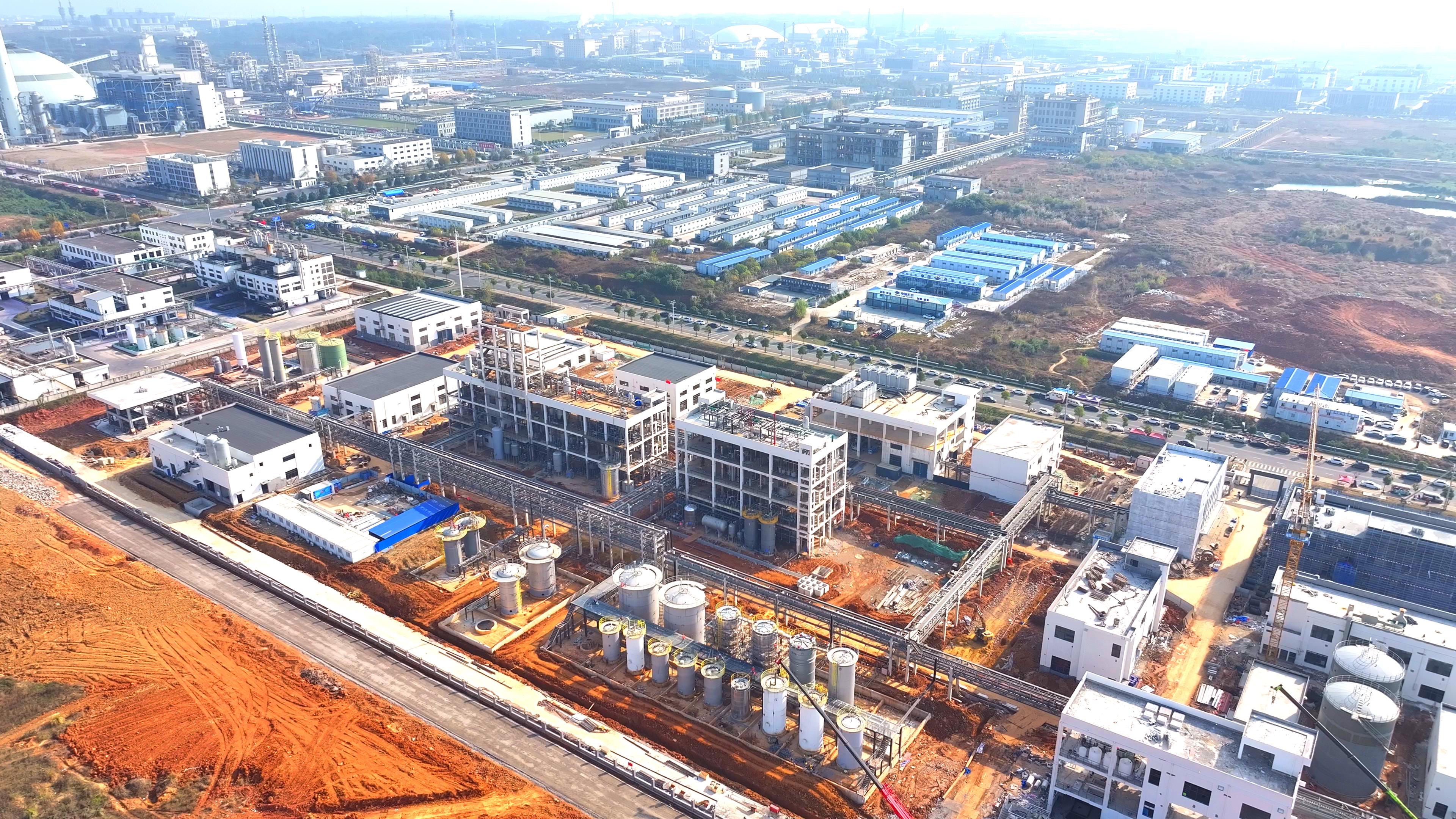 The new-generation lithium battery electrolyte core material project under construction. Photo by Fu Wei
At the park, the new-generation lithium battery electrolyte core material project of Hubei Fusichuang Materials Co., Ltd. is under construction. A material pipeline corridor at the site is scheduled for trial operation next February.
Suspended above ground, the corridor features rows of silver-gray pipelines extending from the factory area to the public pipeline network that serves the entire Tianjiahe Area of Baiyang Industrial Park.
Baiyang is one of Yichang’s most important industrial parks, focusing on chemical materials, renewable phosphorus-lithium materials and high-end equipment manufacturing. In the Tianjiahe Area of the park, a pipeline network has been established as key infrastructure for material transport, intensive pipeline laying and safe production.
Upstream of the utility corridor are chemical projects of Yihua Group, including phosphorus chemicals, ammonia ethanol and chlor-alkali new energy. Numerous downstream enterprises are distributed along the pipeline.
"The liquid chlorine we need for production can be transported directly to our factory from the Yihua Chlor-Alkali New Energy Project via the utility corridor," said Wang Hui, project leader of the new-generation lithium battery electrolyte core material project of Hubei Fusichuang Materials Co., Ltd.
Driven by leading enterprises, Baiyang Industrial Park is linking upstream and downstream projects through a network of material pipelines. This enables coordinated, neighborhood-style development, ensuring door-to-door material transportation, intensive pipeline laying and comprehensive safety assurance for production.
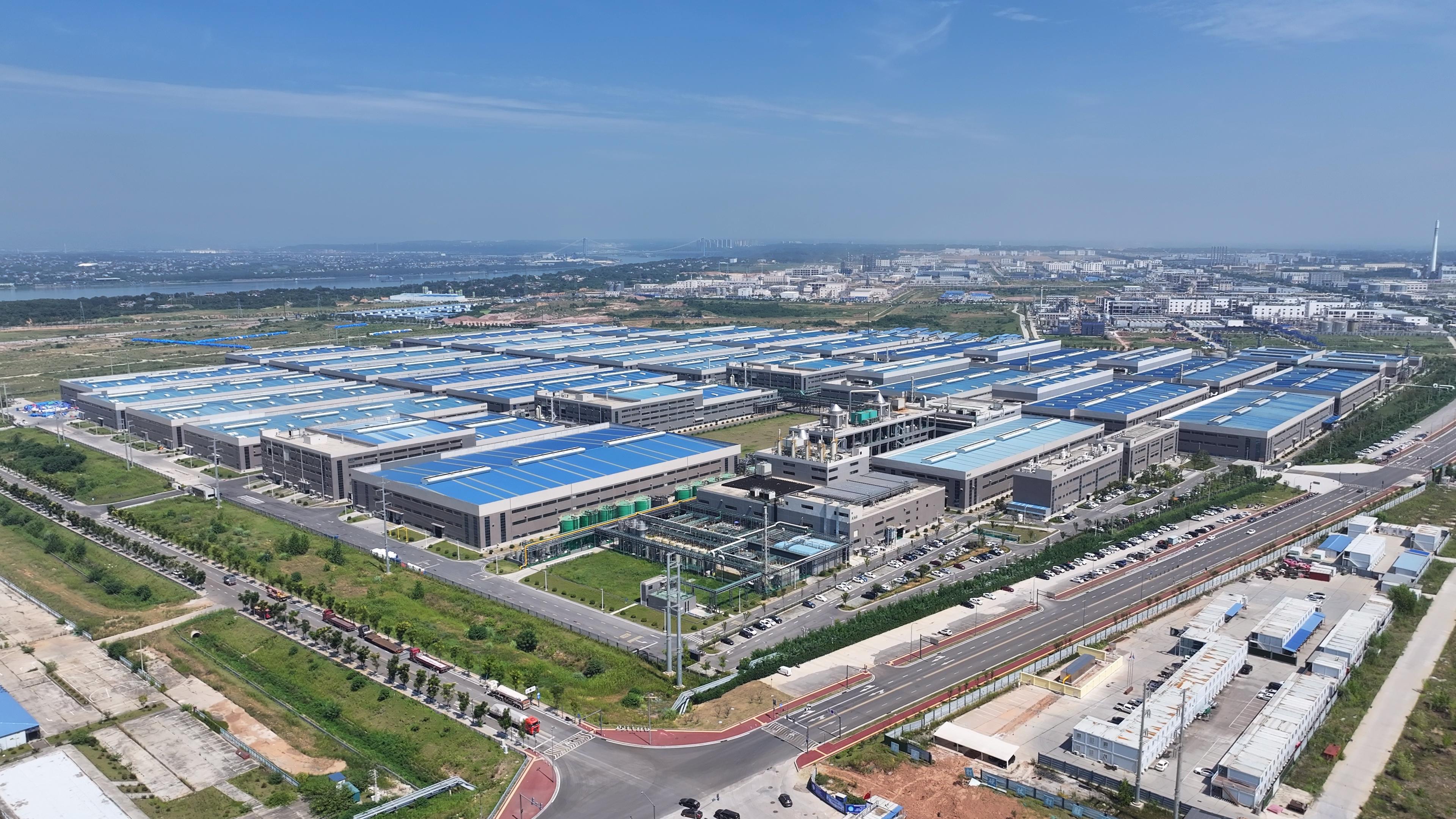
Tianjiahe Area of Baiyang Industrial Park. Photo by Fu Wei
Fusichuang's new-generation lithium battery electrolyte core material project is designed to produce 10,000 tons of lithium bis (fluorosulfonyl) imide (LiFSI) annually. This product is used in manufacturing new-generation lithium battery electrolytes and is one of the key materials for new energy power battery cells. Once operational, the project will require 11,000 tons of liquid chlorine per year, which will react with sulfur dioxide to synthesize sulfonyl chloride.
"Without the support of upstream leading enterprises, we had to outsource sulfonyl chloride from regions like Shandong and Henan. Now, with pipeline transportation through utility tunnels, we can produce it locally, cutting costs by nearly 2,000 yuan (US$282.8) per ton," said Wang.
Xiang Zhen, Deputy Director of the Chemical Industry Park Management Office of Baiyang Park, Yichang High-tech Zone, said: “The park relies on raw materials such as liquid ammonia, liquid chlorine, nitrogen and silane provided by leading enterprises, and uses the public pipeline network as a link for inter-enterprise material transportation. This promotes collaboration and cooperation among enterprises and helps form multiple industry chains.”
Currently, the synergy of leading enterprises continues to expand, attracting high-quality companies and those in the silicon-carbon anode industry chain. This has laid a solid foundation for the park to build industry chains for coal-phosphorus chemical new materials, phosphorus-lithium new energy materials and organic synthesis new materials.
In Baiyang Industrial Park, the first phase of Hubei Heyuan’s New Material project has been completed and put into operation, producing electronic specialty gases, electronic chemicals and industrial gases. Among them, silane gas and acetylene are important raw materials for silicon-carbon anode material production. Once fully completed, the project will have an annual production capacity of 3,000 tons of electronic-grade nitrogen trifluoride.
In 2020, the total industrial output value of Baiyang Industrial Park was 2.65 billion yuan. This year, it is expected to reach 30 billion yuan.
Fu Wei and Xu Tong also contributed to this story.