
Dianjun rises as a core hub for intelligent computing
2026-01-16 20:01:43
By Hu Yikai.
Yichang’s Dianjun District has emerged as a regional computing powerhouse by prioritizing the digital economy. In 2025, its core digital output topped 8 billion yuan (US$1.12 billion), supported by 32 specialized enterprises and more than 3,000 jobs.

Yichang’s Dianjun District has emerged as a regional computing powerhouse by prioritizing the digital economy. In 2025, its core digital output topped 8 billion yuan (US$1.12 billion), supported by 32 specialized enterprises and more than 3,000 jobs.
A panoramic view of Dianjun District. Photo from Photo from the Publicity Department of Dianjun District Committee of CPC.
Located in a key zone for Yangtze River ecological protection, Dianjun has shifted away from energy-intensive industries toward intelligent computing. By 2025, its total intelligent computing capacity exceeded 2,300 petaflops, equivalent to the combined power of hundreds of thousands of top-tier AI accelerators, attracting over 60 leading digital economy firms, including Sugon and Kyland Technology.
This growth underpins a broad industrial upgrade, with 16 major enterprises undergoing digital transformation and a 12 percent increase in value added across designated large-scale industries.
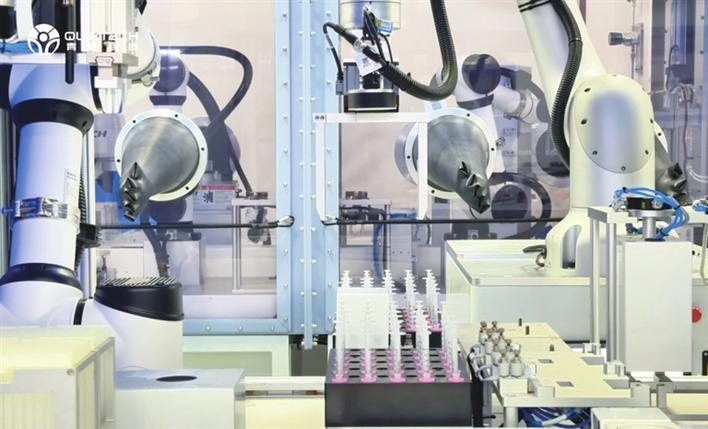
At Qingkui Robotics in Dianjun, robots conduct chemical analysis powered by high-performance computing. Photo by Liu Yajing.
Dianjun is also advancing urban development and talent attraction, with the emergence of a “Science and Education New City” and new institutions such as the Hubei Three Gorges Aviation Institute, drawing a net inflow of 5,361 residents in 2024.

Aerial view of the Hubei Three Gorges Aviation Institute. Photo by Liu Yajing.
Looking ahead, Dianjun’s 15th Five-Year Plan envisions GDP surpassing 20 billion yuan and a doubling of high-tech enterprises. The blueprint calls for 24 new major projects and 50 signed agreements above 100 million yuan in 2026 to strengthen the computing ecosystem and business climate, further cementing its role as a central China computing hub.
Pi Yajie and Liu Yajing also contributed to this story.