Yichang achieves record-breaking air quality
2026-01-30 20:01:49
By Hu Yikai
Yichang’s air quality reached a historic milestone in 2025, with a record 324 days of good air quality, meeting National Level II standards for the first time.
The city ranked fourth in Hubei Province for air clarity, while its PM2.5 concentration placed fifth among the province’s 13 cities.
Yichang’s air quality reached a historic milestone in 2025, with a record 324 days of good air quality, meeting National Level II standards for the first time.
The city ranked fourth in Hubei Province for air clarity, while its PM2.5 concentration placed fifth among the province’s 13 cities.
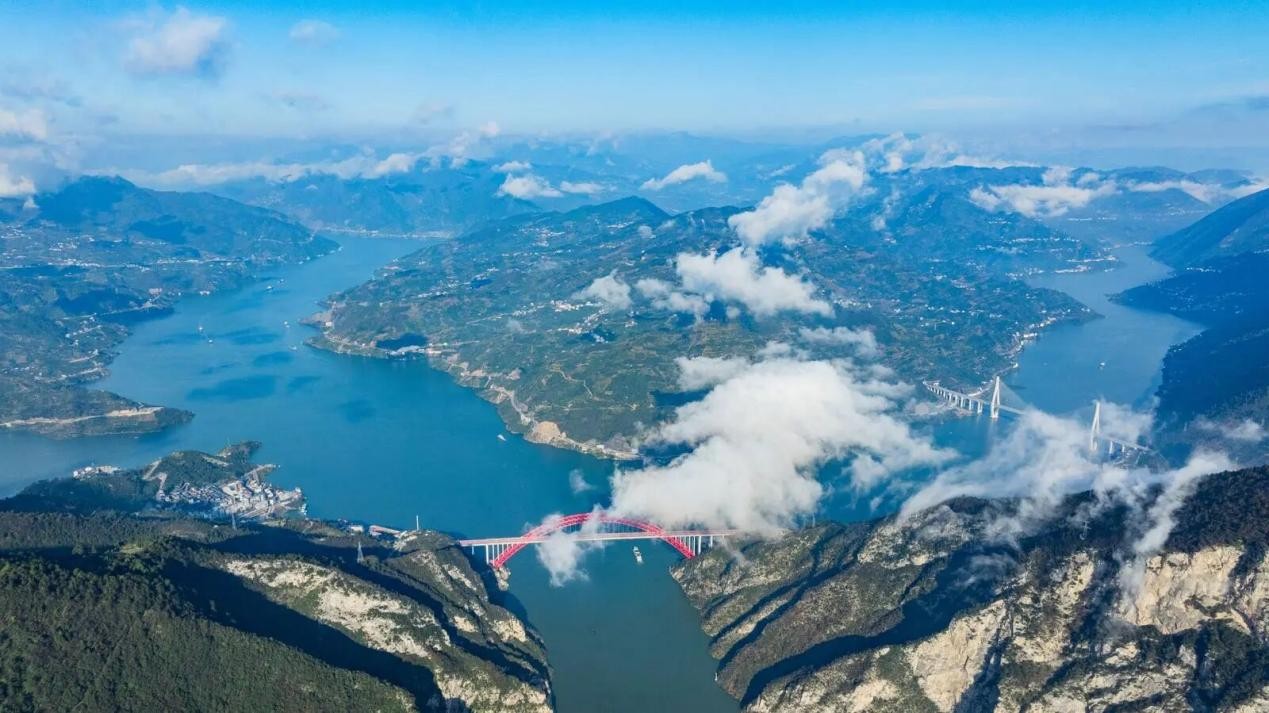
Clouds and mist hover over the entrance to the Xiling Gorge along the Yangtze River. Photo by Peng Qiang.
According to Li Yu, director of the city’s atmospheric center at the Yichang Municipal Ecology and Environment Bureau, PM2.5 levels fell by 15.3 percent during the 14th Five-Year Plan (2021–2025). The city’s pollution control efforts also reduced nitrogen oxide emissions by more than 10,700 tons, doubling the initial target, along with a significant cut in volatile organic compounds.
Local manufacturers tightened entry standards to curb industrial pollution. Sanxia New Material renovated five production lines, reducing emission concentrations to 30 percent below the new national standard.
The city also phased out 28,488 diesel trucks, 360 pieces of machinery and 75 old ships while adding 770 new-energy heavy-duty trucks. Authorities used drones and video monitoring systems to patrol for open burning and banned loose coal combustion in urban areas.
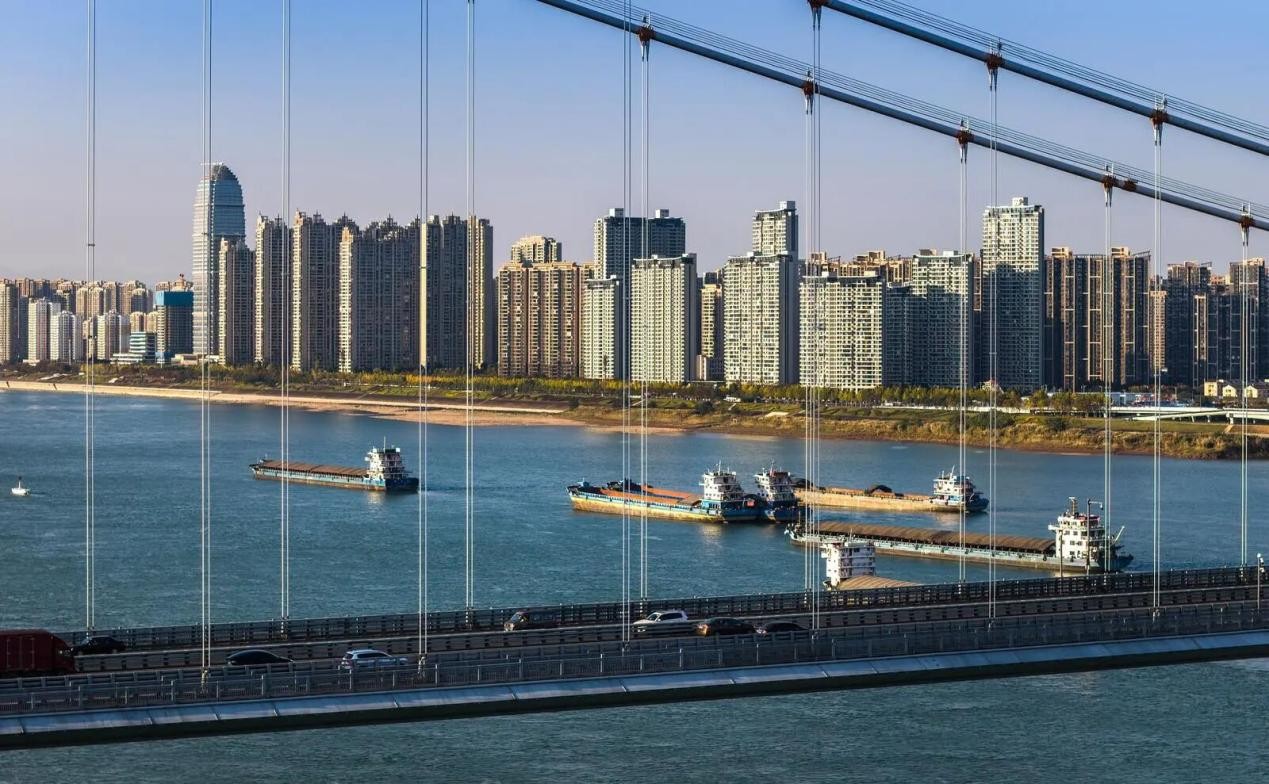
The sun sets over the Yangtze River in Yichang. Photo by Liu Kun.
Ding Feng, director of the Atmospheric Institute at the Hubei Provincial Academy of Eco-Environmental Sciences, noted that mobile sources remain a key area for future emission reductions. He suggested increasing the proportion of vehicles meeting National VI emission standards and expanding the use of new-energy vehicles. He also recommended making greater use of waterway and rail transport to build a greener logistics system.
Yang Jing, Peng Qiang, and Liu Kun also contributed to this story.