Yichang advances model sponge city project
2026-03-04 19:03:23
By Yan Wanqin
On March 3, residents visiting Baimashan National Defense Education Park in Yichang noticed a significant change: after days of rain, the ground remained firm and dry, with rainwater absorbed rather than pooling or running off.
This improvement reflects Yichang’s ongoing efforts to build a sponge city tailored to its mountainous and riverside terrain.
On March 3, residents visiting Baimashan National Defense Education Park in Yichang noticed a significant change: after days of rain, the ground remained firm and dry, with rainwater absorbed rather than pooling or running off.
This improvement reflects Yichang’s ongoing efforts to build a sponge city tailored to its mountainous and riverside terrain.
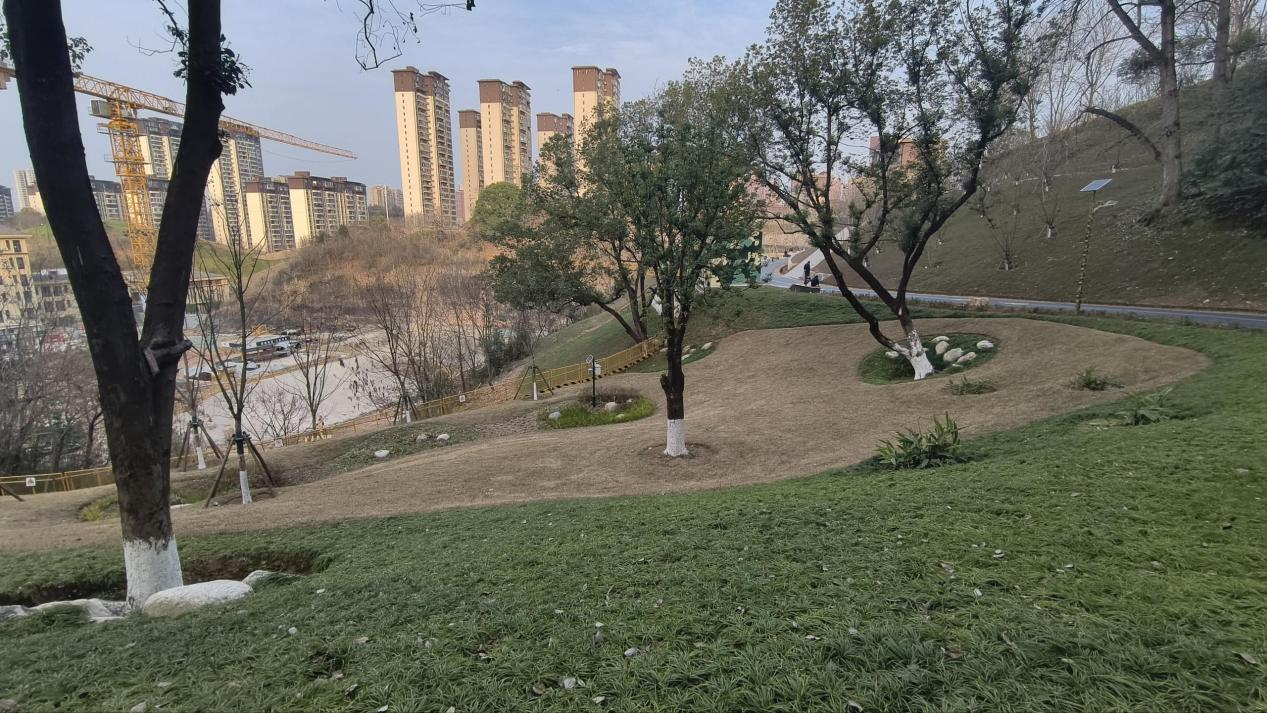
A rain garden at Baimashan National Defense Education Park. Photo by Li Boyan.
The park demonstrates how rainwater can be managed through smart design. According to the Yichang Municipal Housing and Urban-Rural Development Bureau, the site features ecological slopes on hilltops, gravel-lined channels that guide runoff, and sunken green spaces and rain gardens at lower elevations. A 275-cubic-meter underground tank collects, purifies, and reuses rainwater for irrigation.
Yichang was included in the second batch of China’s "Model Sponge Cities" in 2022 and has focused on developing a blueprint that works for cities with similar mountainous and riverside geography.
During the three-year pilot period, the city introduced targeted regulations, set up a multi-department coordination mechanism, and completed 183 demonstration projects across seven categories.
Progress includes the restoration of the Shahe wetland, flood control upgrades at the Juanqiaohe wetland, and the completion of major drainage channels. A total of 24 previously waterlogged areas have been addressed.
In 2026, Yichang is pushing forward with its sponge city agenda. Goals include preventing waterlogging after light rain, avoiding flooding during heavy rain, eliminating black and odorous water bodies, and reducing the urban heat island effect.
New regulations now ensure legal oversight from planning to project completion, while sponge city principles are being integrated into urban renewal and old residential community renovations.
The city is also strengthening its technical foundation, partnering with Peking University and Tsinghua University to develop guidelines tailored to mountainous cities. A smart management platform with over 100 monitoring points is now in trial operation, using real-time data to evaluate the performance of the city's sponge infrastructure.
Yang Xue, Li Boyan also contributed to this story.