Mini-wetlands purify rural wastewater across Yichang
2026-03-06 19:03:29
By Yan Wanqin
As villager Tan Chaoyuan prepares lunch in Sanbanqiao Village, the water used to wash his vegetables flows down the drain, beginning a journey far different from the pollution-filled path of the past.
"This water goes to the village's treatment facility, where it's cleaned and returned to the fields," Tan said.
As villager Tan Chaoyuan prepares lunch in Sanbanqiao Village, the water used to wash his vegetables flows down the drain, beginning a journey far different from the pollution-filled path of the past.
"This water goes to the village's treatment facility, where it's cleaned and returned to the fields," Tan said.
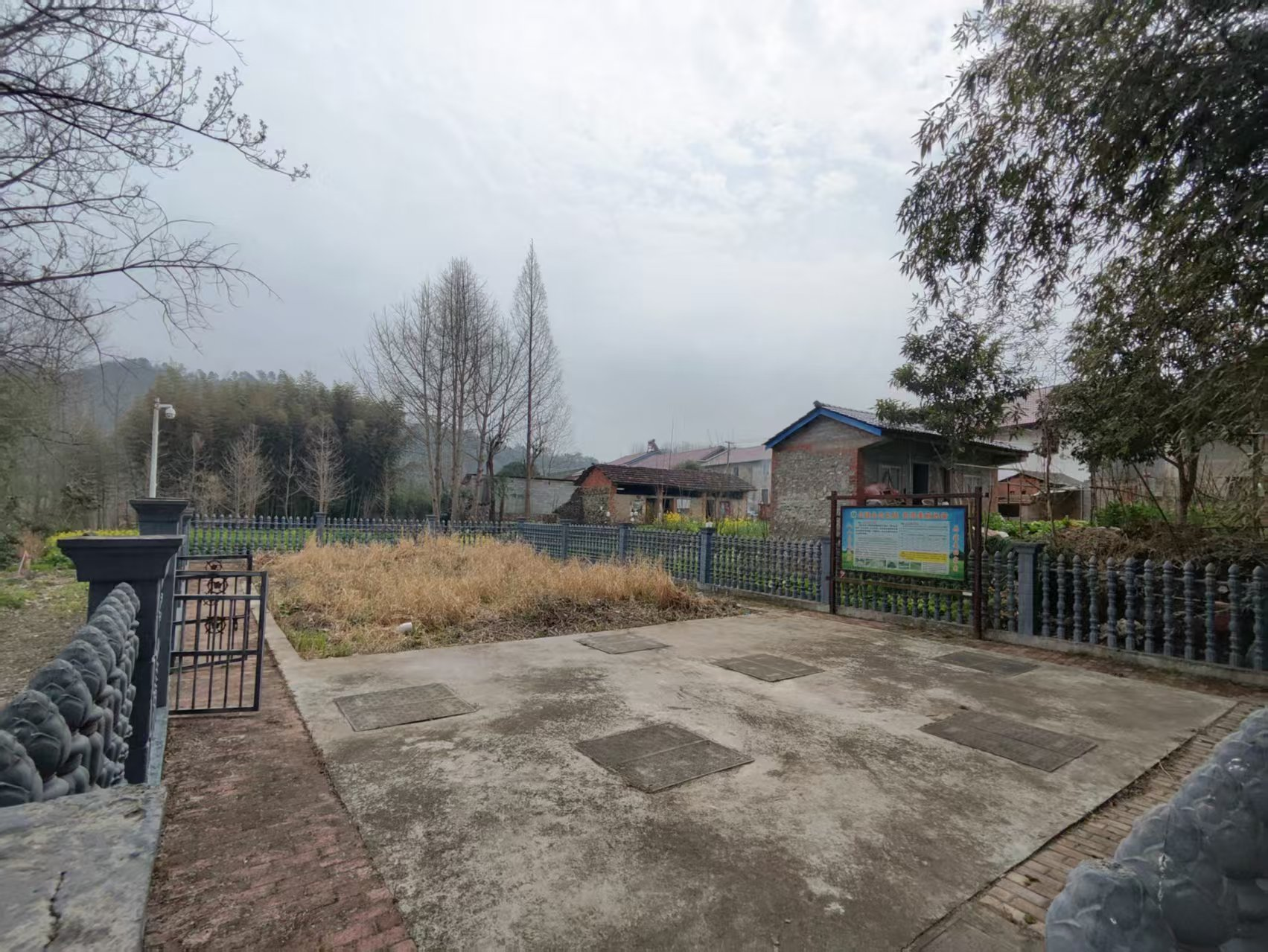 The constructed wetland in Sanbanqiao Village, Yuan'an County. Photo by Chen Fei.
The facility he refers to is an "artificial wetland" — a plot roughly the size of a mini tennis court, with manhole covers on one side and lush greenery on the other. Beneath the surface lies a multi-stage treatment system.
Wang Yan, from the local ecological environment bureau, explains the process: wastewater from 120 households first enters a collection tank where grease and sediment are removed. It then flows into biochemical tanks, where microbial films break down organic pollutants.
Next, the waterfilters upward through five layers of specialized media, including gravel and zeolite, where pollutants are captured and transformed. Finally, surface plants absorb remaining nutrientssuch as nitrogen and phosphorus.
The result is purified water that meets strict provincial discharge standards, flowing into the Ju River, serving as a reliable irrigation source for downstream farms.
By the end of February, 80.9 percent of Yichang's 1,319 villages had completed similar sewage treatment projects.
Commissioned in 2021, the solar-powered system treats 50 tons of sewage daily with no on-site staff. It has helped solve the challenge of building and maintaining costly facilities in rural areas.
This green infrastructure has expanded across Yuan'an County, where 151 such wetlands are now in operation. The approach is adapted to local conditions: scattered households use simple septic tanks, recycling nutrient-rich water into kitchen gardens, while denser villages combine tanks, digesters, and wetlands.
Neighboring counties have also developed their own models. Changyang connects some villages to urban treatment networks while testing larger facilities semi-annually, achieving a 78.1 percent treatment rate by late 2025. Zhijiang uses solar-powered systems for compact communities and gravity-fed solutions for remote homes.
Chen Fei, Wang Fei also contributed to this story.
Wang Yan, from the local ecological environment bureau, explains the process: wastewater from 120 households first enters a collection tank where grease and sediment are removed. It then flows into biochemical tanks, where microbial films break down organic pollutants.
Next, the waterfilters upward through five layers of specialized media, including gravel and zeolite, where pollutants are captured and transformed. Finally, surface plants absorb remaining nutrientssuch as nitrogen and phosphorus.
The result is purified water that meets strict provincial discharge standards, flowing into the Ju River, serving as a reliable irrigation source for downstream farms.
By the end of February, 80.9 percent of Yichang's 1,319 villages had completed similar sewage treatment projects.
Commissioned in 2021, the solar-powered system treats 50 tons of sewage daily with no on-site staff. It has helped solve the challenge of building and maintaining costly facilities in rural areas.
This green infrastructure has expanded across Yuan'an County, where 151 such wetlands are now in operation. The approach is adapted to local conditions: scattered households use simple septic tanks, recycling nutrient-rich water into kitchen gardens, while denser villages combine tanks, digesters, and wetlands.
Neighboring counties have also developed their own models. Changyang connects some villages to urban treatment networks while testing larger facilities semi-annually, achieving a 78.1 percent treatment rate by late 2025. Zhijiang uses solar-powered systems for compact communities and gravity-fed solutions for remote homes.
Chen Fei, Wang Fei also contributed to this story.