Ancient tea trees thrive through sustainable development
2026-06-17 21:06:15
By Chen Si.
In recent years, Yichang’s agricultural and rural affairs authorities have promoted sustainable development of ancient tea tree conservation and industry growth through digital monitoring, scientific cultivation, and brand building.
In recent years, Yichang’s agricultural and rural affairs authorities have promoted sustainable development of ancient tea tree conservation and industry growth through digital monitoring, scientific cultivation, and brand building.
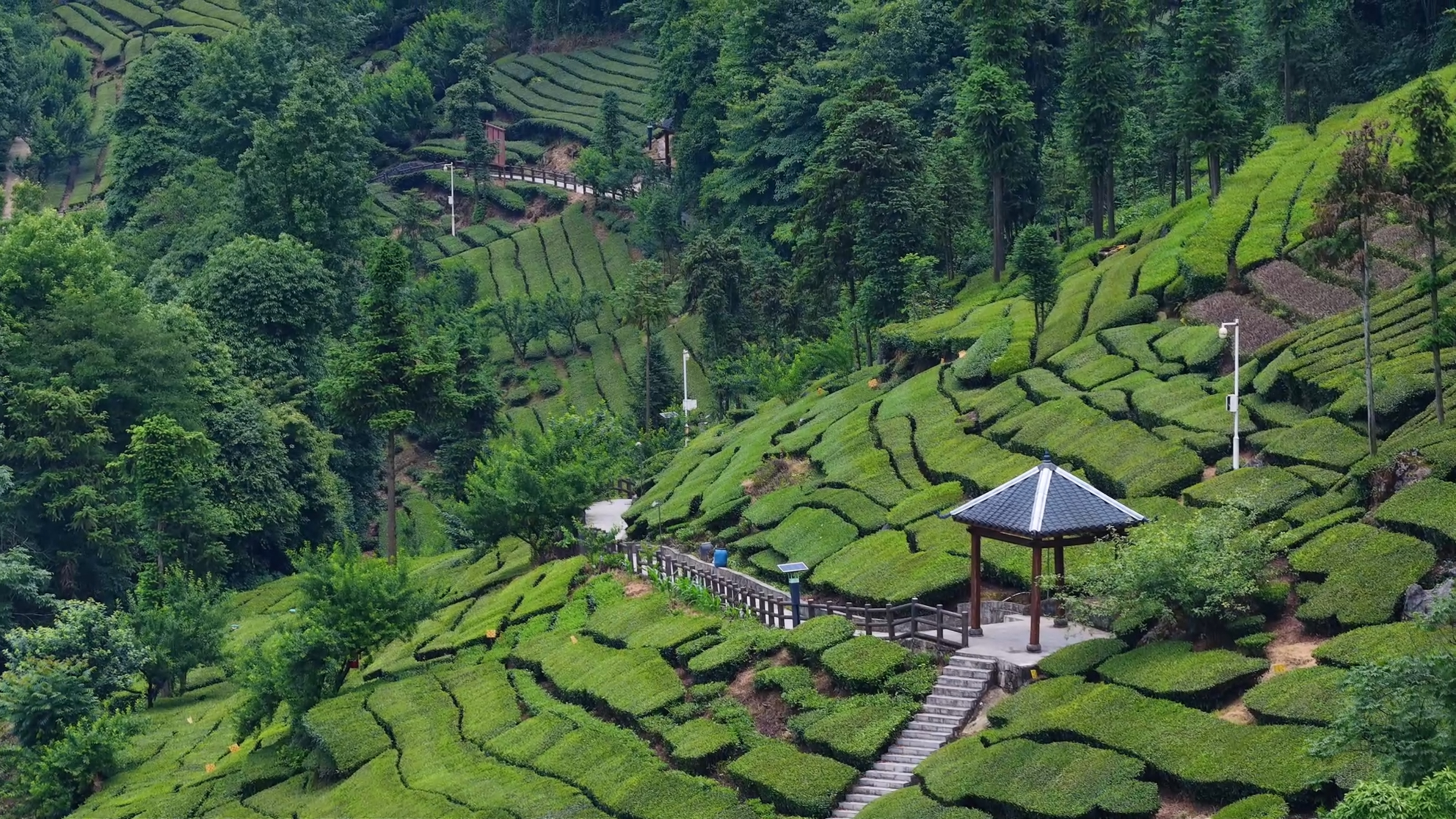
Aerial view of ancient tea gardens in Wufeng Tujia Autonomous County. Photo by Tanyang Chenlei
Recently, technicians attached identification tags to the last batch of ancient tea trees in a tea garden in Wufeng Tujia Autonomous County.
Each tag bears a unique QR code that serves as a digital ID for the tree. By scanning the code, users can access detailed information, including the tree’s age, height, crown width, and maintenance records.
“At present, the county is home to more than 20,000 ancient tea trees that are over 100 years old, all tagged with individual QR codes,” said Huang Shaoqi, a researcher at the Wufeng Tea Development Center.
The latest survey data show that Wufeng has more than 40,000 mu (2,666 hectares) of mature tea plantations and over 10,000 mu of ancient tea gardens, with more than 330,000 ancient tea trees in total.
Since 2024, Wufeng has completed detailed surveys of ancient tea tree resources across six townships. In total, 20,000 individual ancient tea trees and 41 ancient tea tree clusters have been registered and placed under protection, covering nearly 3,000 mu.
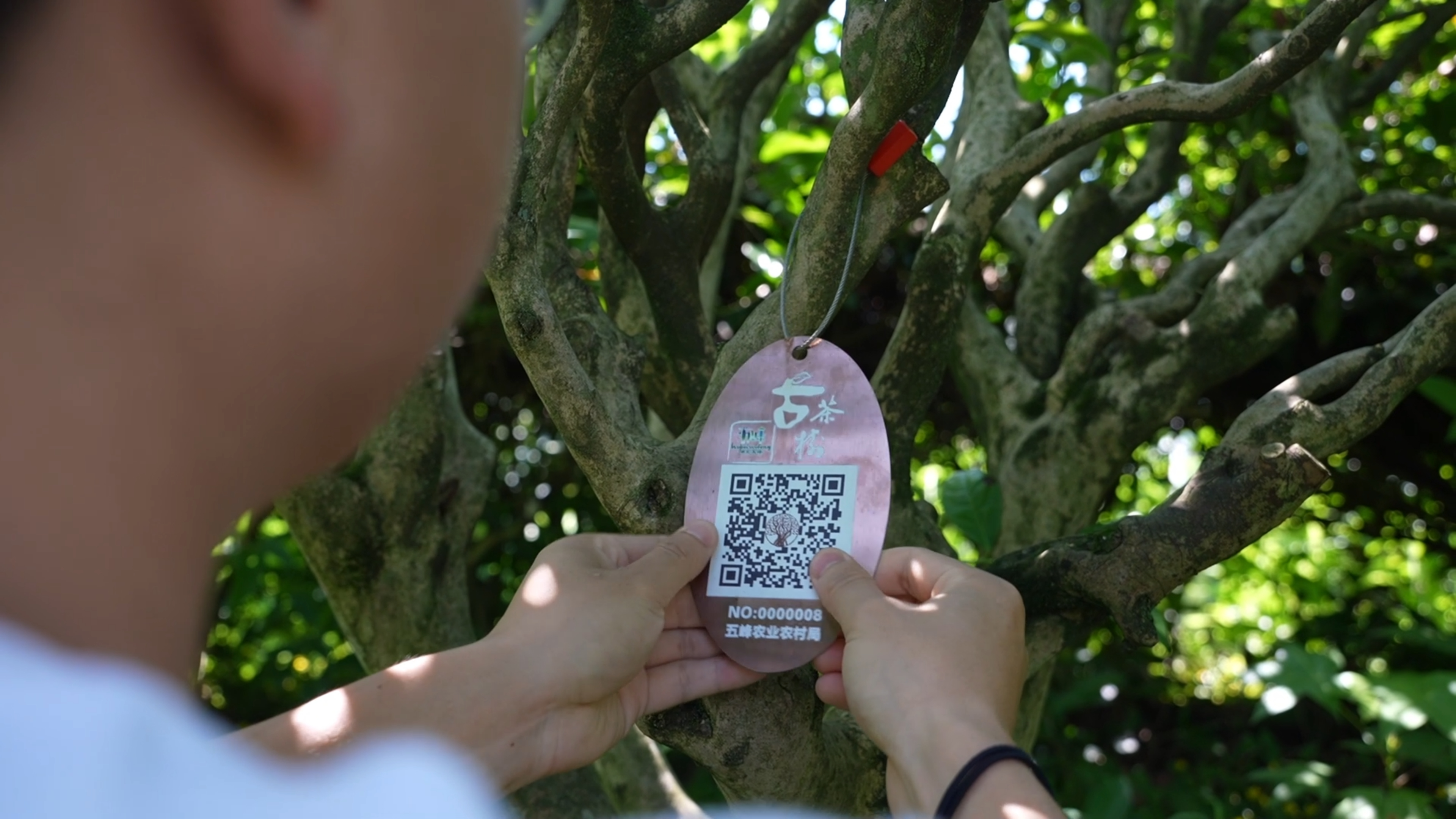 Technician attaches tags to ancient tea trees. Photo by Tanyang Chenlei
At Jiming Tea Industry Co., Ltd. production lines are busy turning ancient-tree tea leaves into black tea with a unique floral and fruity fragrance.
“Our ancient-tree black tea first attracted customers because of its quality, but we did not anticipate such a high repeat-purchase rate,” said Xiao Fei, sales manager of Jiming Tea Industry. Over 80 percent of orders come from referrals made by repeat buyers.
Supported by e-commerce platforms and livestream sales, the tea is sold nationwide, including in Beijing, Shanghai, and Hong Kong.

Production workshop for ancient-tree tea products. Photo by Tanyang Chenlei
Growing deep in the mountains, ancient tea trees develop extensive root systems that absorb rich minerals and beneficial bioactive compounds. Developed under the guidance of the Tea Research Institute, Yichang Academy of Agricultural Sciences, Jiming’s wild ancient-tree black tea draws its competitive edge from these natural qualities.
The Yichang Academy of Agricultural Sciences conducts long-term technical research for the tea industry. Its research covers germplasm collection and identification, tea variety breeding, green pest control, and intelligent processing technologies, providing comprehensive support for the protection and sustainable use of ancient tea tree resources.
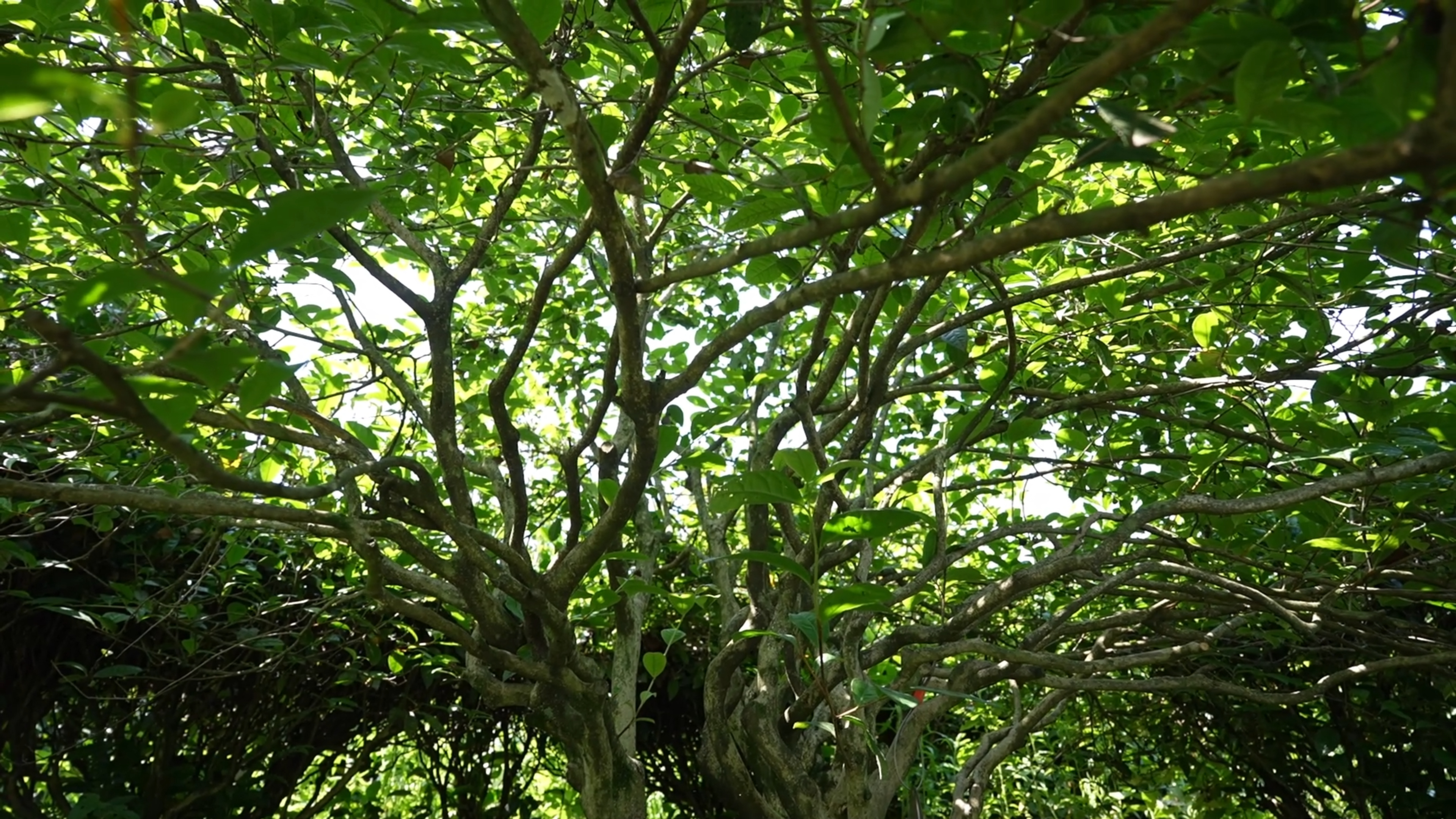
Lush branches and leaves of ancient tea trees. Photo by Tanyang Chenlei
“We focus on the development needs of both Yichang’s tea industry and its ancient tea tree sector, providing targeted technical support and pursuing key research breakthroughs,” said Qiu Fangfang, director of the Tea Research Institute.
The institute assists with the survey, collection, and identification of ancient tea germplasm and guides the construction of germplasm nurseries.
It has identified 15 distinctive tea germplasm resources, strengthening the genetic foundation of the local tea industry. At the same time, it deepens academy-industry cooperation, optimizes processing techniques tailored to ancient tea varieties, and helps manufacturers improve product quality.
Qiu said the city is now compiling the Work Plan for the Survey, Protection and Utilization of Ancient Tea Tree Resources.
Once released, the plan will provide guidance for the scientific protection and sustainable use of ancient tea tree resources across Yichang, while promoting cross-regional exchange and sharing of ancient tea conservation experience.
Zhou Chongyu, Tanyang Chenlei, Zhou Ying also contributed to this story