
Biodegradable mulch film boosts crop quality and efficiency
2026-06-23 20:06:36
By Chen Si.
Recently, Yichang authorities launched a pilot program to test integrated biodegradable film mulching and rice transplanting technology for the first time. Trials are now underway in Wangdian, Miaoqian and Herong towns of Dangyang.
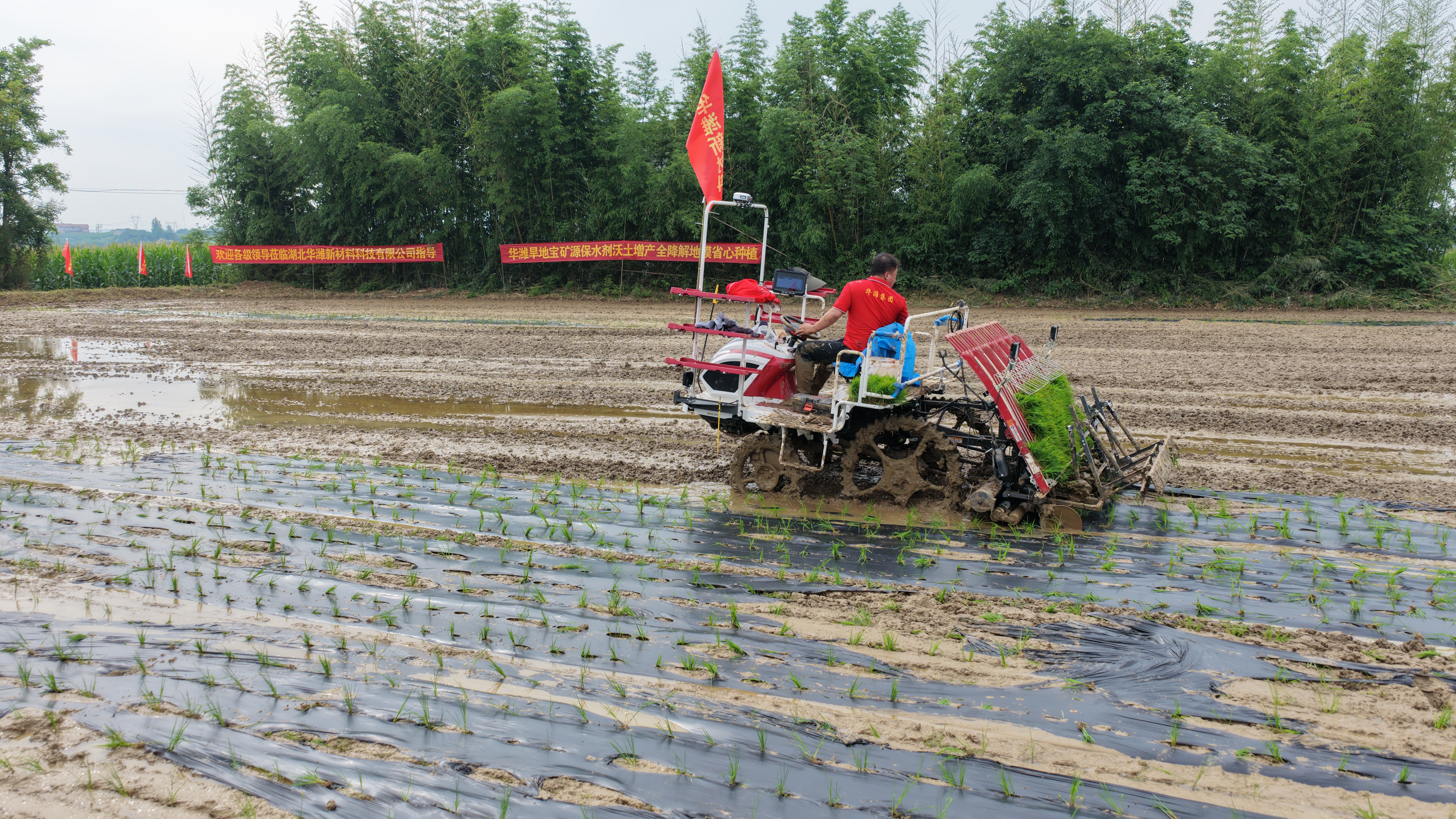
Recently, Yichang authorities launched a pilot program to test integrated biodegradable film mulching and rice transplanting technology for the first time. Trials are now underway in Wangdian, Miaoqian and Herong towns of Dangyang.
An integrated mulching and rice transplanter machine is working in the field. Photo by Zhang Kai
Over the past few days, integrated mulching and rice transplanters have been operating across test fields in the three towns. As the machines move forward, fully biodegradable mulch film is laid evenly over the paddy surface while rice seedlings are transplanted through pre-punched holes in the film.
“Mulching and rice transplanting used to be two separate operations. Now one machine can complete both tasks in a single run,” said Wang Xiaokai, Chairman of Hubei Huwei New Materials Technology Co., Ltd.
The company plans to build demonstration test fields covering 800 mu (53.3 hectares) in Dangyang and 300 mu in Changyang Tujia Autonomous County this year.
Wang Yan, a technician from the Wangdian Agriculture and Rural Service Center, explained the technology’s advantages.
“The mulch film raises soil temperature and protects seedlings from cold weather. It physically inhibits weed growth, removing the need for herbicides. Only the topsoil needs to remain moist while water is stored in field trenches, reducing water use by more than 30 percent. Base fertilizer is applied in one go, cutting chemical fertilizer application by an additional 10 percent,” she said.
Wang Yan also noted key land preparation standards requirements.
“Sandy soil should be leveled three days ahead of planting, whereas heavy loam with deep mud requires five days of preparation. The silt must be fully settled and no water should be seen on the field surface. Otherwise, the film cannot stick closely to the soil and more seedlings will be missed during the process.”
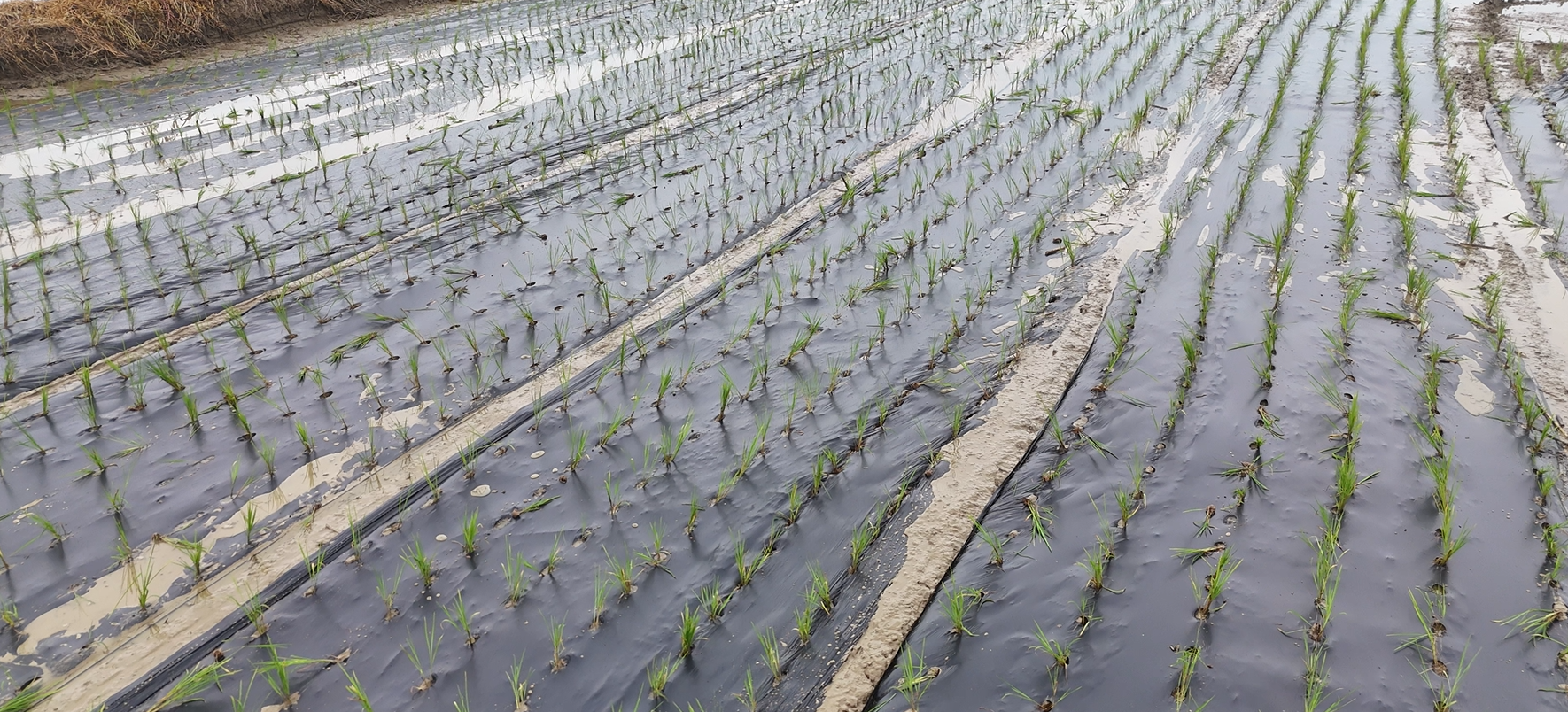 Rice paddies covered with biodegradable mulch film. Photo by Zhang Kai
Yao Tianzhen, a large rice grower who manages 1,000 mu of paddies in Changyang Tujia Autonomous County, made a special trip to Dangyang to observe the demonstration.
Yao went back to her hometown in 2018 and started her business with drone-based crop protection services. She now operates both a farmers’ cooperative and an agricultural company.
“I’ve long known mulch film rice farming delivers great benefits. It reduces the need for manual weeding and pesticide sprays, making it more environmentally friendly,” Yao said. “I came to learn more about the technology and hope to adopt it on my own fields once it becomes more mature.”
Mulch film cultivation can effectively raise soil temperature, lock in soil moisture, suppress weeds, and reduce water consumption.
“The film is made from biodegradable raw materials. After protecting rice throughout the growing season, it decomposes into water and carbon dioxide, eliminating white pollution from the source,” Wang Xiaokai explained.
The technology remains at the trial and demonstration stage. “We will sort out a set of standardized technical guidelines for this system. Our goal is to expand its application in hilly and mountainous regions next year so that more farmers can access, afford, and benefit from this technology,” Wang Xiaokai added.
Zhang Kai, Zhang Heyan and Xue Enwei also contributed to this story