
Hubei Lianchang New Material completes digital transformation
2026-09-03 18:09:42
By Zhou Chunyi.
A year-long digital overhaul at Hubei Lianchang New Material has broken down data silos, boosted overall efficiency by 20 percent, and put its core product into the supply chains of BASF and Bayer.
On August 31, at the central control room of Lianchang New Material, a 75-inch screen began to display real-time plant-wide data, including reactor temperatures, pressures, and warehouse inventory turnover rates.
The company, which is in Yichang’s Yaojiagang Chemical Park, primarily produces fluorine-containing material intermediates and the benzoyl chloride series. Prior to the transformation, its production, finance, and office systems operated independently. Managers had to rely on manual aggregation of Excel spreadsheets across multiple departments to obtain comprehensive operational reports, leading to significant decision-making delays.
A year-long digital overhaul at Hubei Lianchang New Material has broken down data silos, boosted overall efficiency by 20 percent, and put its core product into the supply chains of BASF and Bayer.
On August 31, at the central control room of Lianchang New Material, a 75-inch screen began to display real-time plant-wide data, including reactor temperatures, pressures, and warehouse inventory turnover rates.
The company, which is in Yichang’s Yaojiagang Chemical Park, primarily produces fluorine-containing material intermediates and the benzoyl chloride series. Prior to the transformation, its production, finance, and office systems operated independently. Managers had to rely on manual aggregation of Excel spreadsheets across multiple departments to obtain comprehensive operational reports, leading to significant decision-making delays.
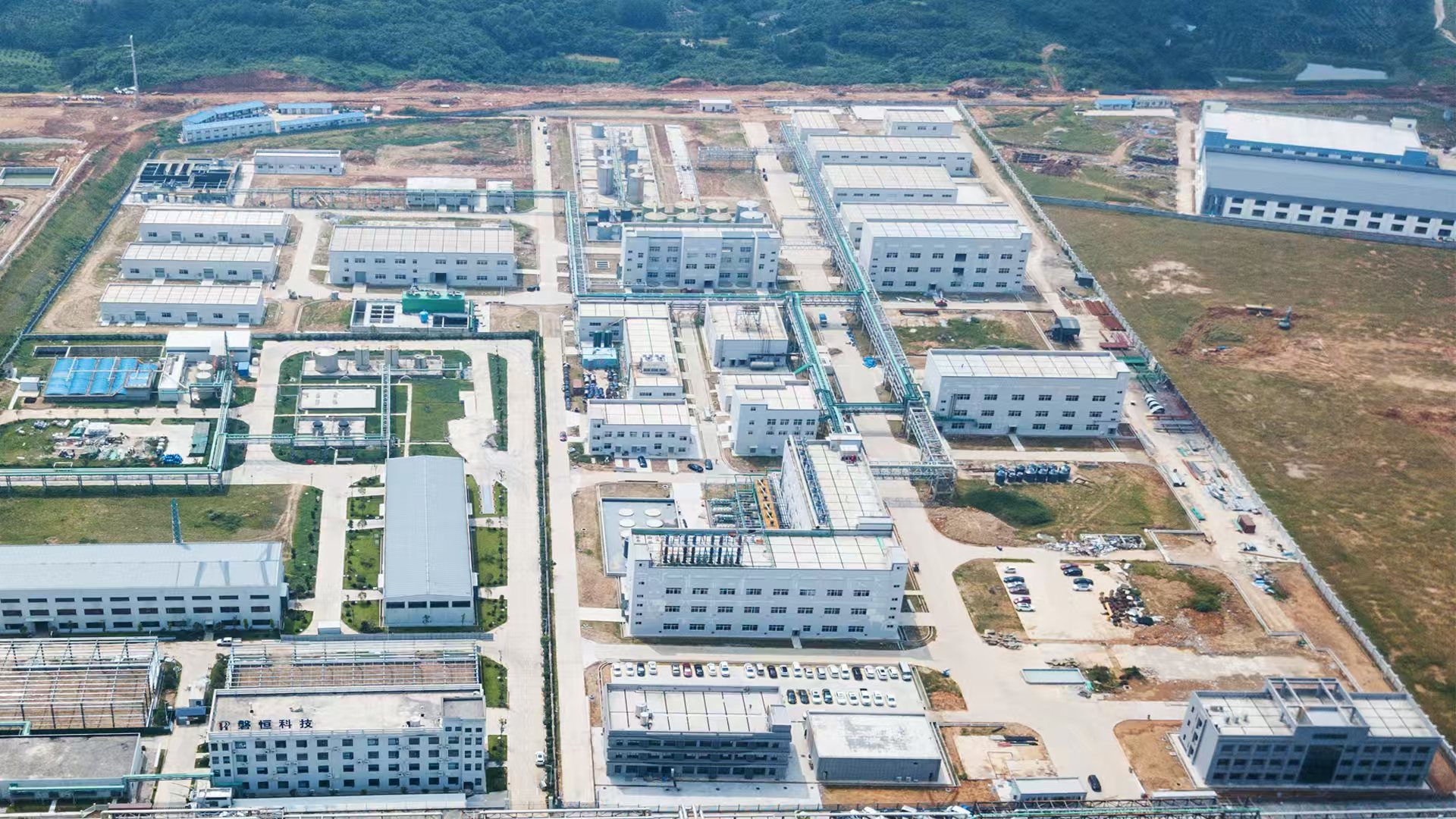 Factory site of Hubei Lianchang New Material Co., Ltd. Photo from Hubei Lianchang New Material.
“Digital transformation is critical for the company's development,” said Zheng Lanjun, who led the digital overhaul.
The transformation, launched in May 2025, followed a phased “standardize first, then optimize” strategy in partnership with system implementers and supervisors. The company first migrated 149 approval workflows and 334 statistical forms to a low-code platform to standardize internal processes.
It then deployed a Manufacturing Execution System to collect real-time production data including temperature, pressure, and energy consumption.
Finally, it developed deep interfaces between its systems, enabling single-entry synchronization of materials, suppliers and warehouse information, automatic updates of personnel changes, and cross-system transfer of business documents.
Financial voucher automation now exceeds 90 percent, achieving full integration of cash flow, business flow, and document flow.
With the support of explosion-proof PDAs and industrial touchscreen terminals, warehouse staff can now perform batch traceability and precise inventory counts, boosting inventory turnover by more than 25 percent. Managers approve procurement, reimbursement, and other processes via mobile devices, reducing administrative costs by 15 percent.
Overall equipment effectiveness rose by 15 percent, total production efficiency increased by 20 percent, and product purity has been consistently maintained above 99.5 percent.
In 2025, the company generated 220 million yuan (US$32.4 million) in output value. Its core product, 4-Chlorobenzoyl chloride, now holds the largest market share in the domestic niche segment.
Gong Changjun and Wu Xiaoman also contribute to the story.