High-Altitude Edge Powers Booming Vegetable Industry
2026-09-04 20:09:00
By Yan Wanqin.
Yichang has turned its mountain climate into a thriving vegetable industry. Ten villages now each report annual output value exceeding 100 million yuan (US$14.7 million).
At Hongqiping Village, over 1,000 meters above sea level in Wufeng Tujia Autonomous County, farmers are harvesting cucumbers and eggplants. Cold-chain trucks carry the produce to markets in Jiangsu, Shanghai, Wuhan, and beyond.
"The high-altitude vegetables have been very popular since they hit the market," said Peng Yincheng, head of the Jinrui Professional Cooperative. The cooperative's cucumber and eggplant output value per mu is expected to exceed 10,000 yuan. Chili peppers should reach about 6,000 yuan per mu.
The cooperative has planted over 1,000 mu of high-altitude vegetables. This includes 400 mu of rain-sheltered greenhouses for extended autumn production. It uses an integrated model of seedling nurseries, facility farming, unified purchase, cold storage, and direct cold-chain delivery. Major supermarket chains such as Zhongbai Warehouse are among its buyers.
Yichang now has over 1 million mu of high-altitude vegetable planting area. Annual output is estimated at 2.5 million metric tons, according to the municipal agricultural technology center. The sector ranks among the best in Hubei Province. Huoshaoping Township has been named a national agricultural industry powerhouse.
Yichang has turned its mountain climate into a thriving vegetable industry. Ten villages now each report annual output value exceeding 100 million yuan (US$14.7 million).
At Hongqiping Village, over 1,000 meters above sea level in Wufeng Tujia Autonomous County, farmers are harvesting cucumbers and eggplants. Cold-chain trucks carry the produce to markets in Jiangsu, Shanghai, Wuhan, and beyond.
"The high-altitude vegetables have been very popular since they hit the market," said Peng Yincheng, head of the Jinrui Professional Cooperative. The cooperative's cucumber and eggplant output value per mu is expected to exceed 10,000 yuan. Chili peppers should reach about 6,000 yuan per mu.
The cooperative has planted over 1,000 mu of high-altitude vegetables. This includes 400 mu of rain-sheltered greenhouses for extended autumn production. It uses an integrated model of seedling nurseries, facility farming, unified purchase, cold storage, and direct cold-chain delivery. Major supermarket chains such as Zhongbai Warehouse are among its buyers.
Yichang now has over 1 million mu of high-altitude vegetable planting area. Annual output is estimated at 2.5 million metric tons, according to the municipal agricultural technology center. The sector ranks among the best in Hubei Province. Huoshaoping Township has been named a national agricultural industry powerhouse.
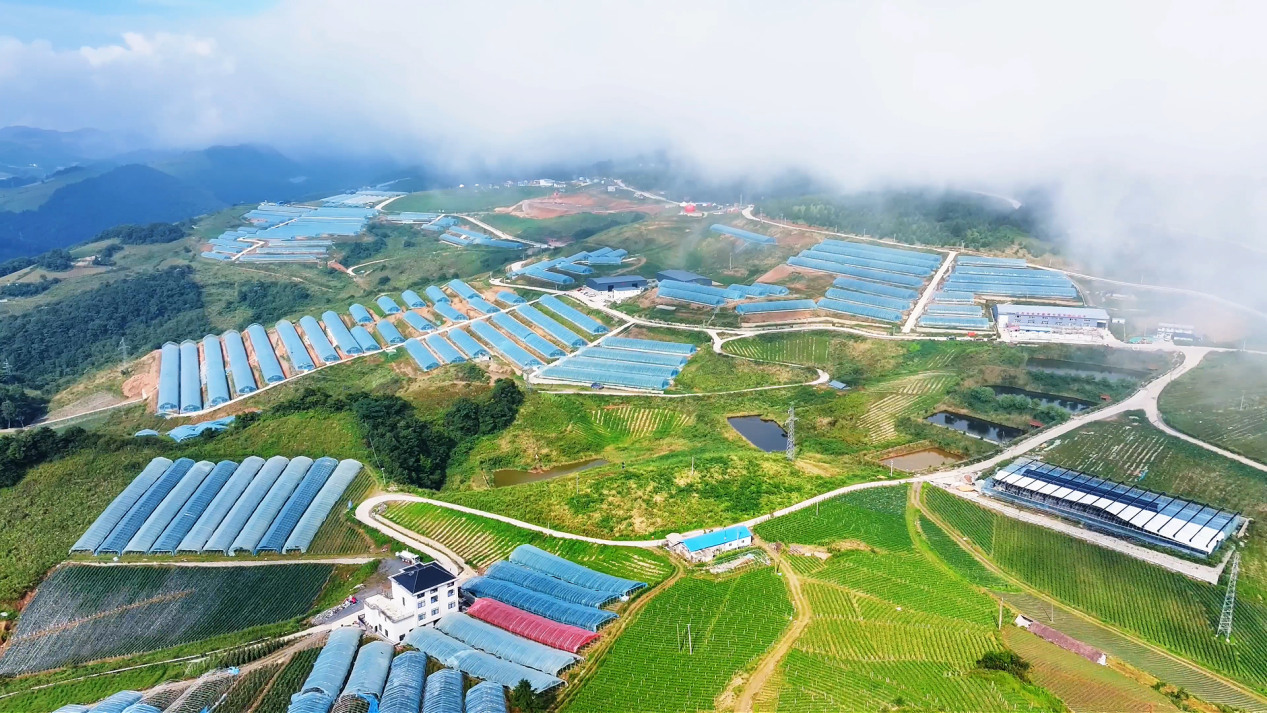 The Vegetable planting base in Huoshaoping Township, Changyang. Photo by Lin Cong.
The industry is mainly distributed in high-elevation townships across Changyang, Wufeng, Xingshan, Zigui, Yidu, and Yiling. Changyang Tujia Autonomous County is the core production area. The Ministry of Agriculture and Rural Affairs has recognized it as a national advantageous region. Its products sell across China and abroad.
The Hubei Academy of Agricultural Sciences has established an experimental base and the province's first high-altitude vegetable research station in Changyang. New disease-resistant and high-yield varieties such as Chucui white radish and Baoyu Chinese flowering cabbage have been introduced there. More than 30 suitable varieties have been selected. Planting patterns have shifted from single to multiple cropping and from continuous to rotational cropping.
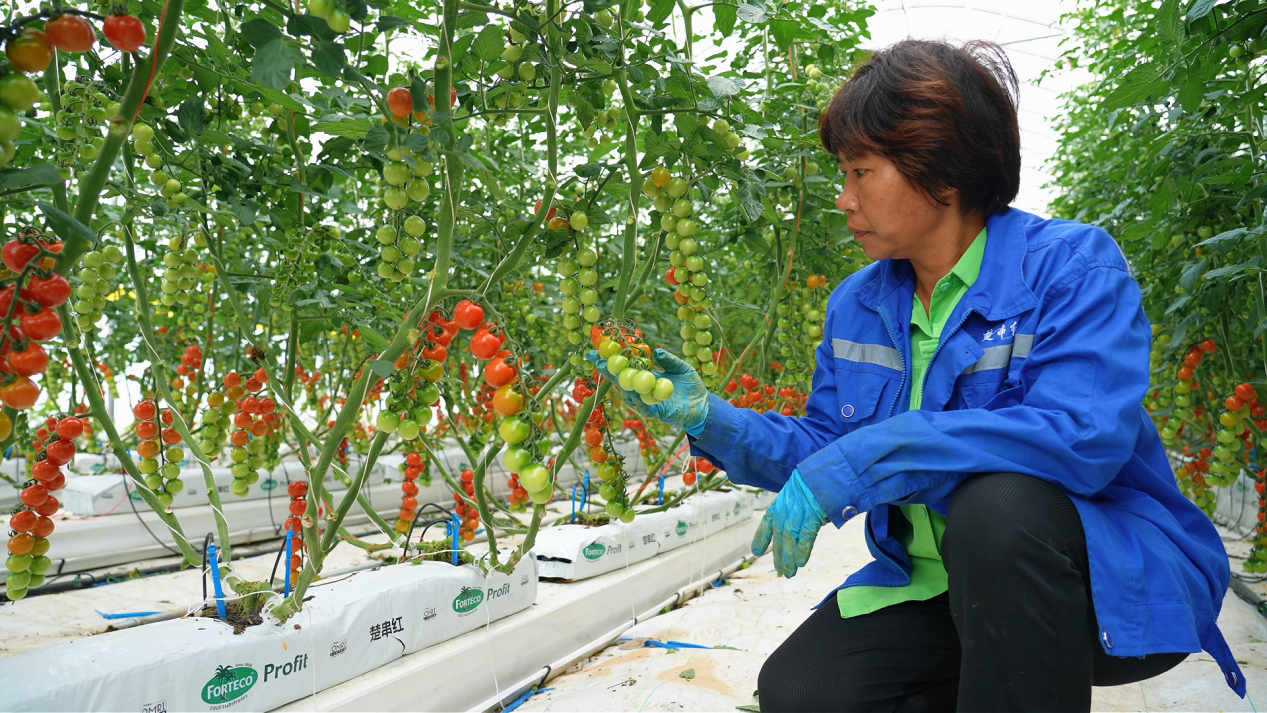 A worker checks the growth of tomatoes in a greenhouse. Photo by Lin Cong.
Yichang has strengthened scientific support and standardized production. It promotes facility agriculture, integrated water-fertilizer management, green pest control, and industrialized seedling production. Cooperation with Huazhong Agricultural University and provincial academies has intensified to optimize variety structures and extend market supply periods.
Nearly 200 farming entities have built cold storage facilities with a total capacity of over 200,000 cubic meters. The city has also promoted the regional public brand Changyang Alpine Vegetables. It has established long-term partnerships with catering chains like Haidilao, e-commerce platforms including Dingdong Maicai, and major retailers such as Wushang Mart. These links ensure green, high-quality high-altitude vegetables reach consumers across the country.
Jie Xingwei, Tan Shu and Sun Wei contributed to this story.