Yichang taps woodland resources to boost rural incomes
2026-09-19 20:09:24
By Gao Qing
Yichang's woodlands are creating new sources of income for local farmers through the development of its under-forest economy.
Xiang Zhaobing, a farmer in Changleping Town, Wufeng County, checked gallnut plants in the woods on September 16 as he looked forward to a good harvest. He benefits from the local "forest-herb-bee" model, which generates 3,000 to 4,000 yuan per mu.
Xiang is one of many farmers benefiting from the sector. Yichang has 1.128 million mu of woodland used for under-forest economic activities, creating jobs for 120,000 people and generating annual output of 11.7 billion yuan (US$1.72 billion), according to the Yichang Municipal Forestry and Parks Bureau. The industry has grown from scattered farming into integrated, large-scale operations, supporting rural revitalization.
Yichang has developed four main forms of under-forest economic activity: planting, breeding, forest product processing, and forest-based tourism and recreation.
Yichang's woodlands are creating new sources of income for local farmers through the development of its under-forest economy.
Xiang Zhaobing, a farmer in Changleping Town, Wufeng County, checked gallnut plants in the woods on September 16 as he looked forward to a good harvest. He benefits from the local "forest-herb-bee" model, which generates 3,000 to 4,000 yuan per mu.
Xiang is one of many farmers benefiting from the sector. Yichang has 1.128 million mu of woodland used for under-forest economic activities, creating jobs for 120,000 people and generating annual output of 11.7 billion yuan (US$1.72 billion), according to the Yichang Municipal Forestry and Parks Bureau. The industry has grown from scattered farming into integrated, large-scale operations, supporting rural revitalization.
Yichang has developed four main forms of under-forest economic activity: planting, breeding, forest product processing, and forest-based tourism and recreation.
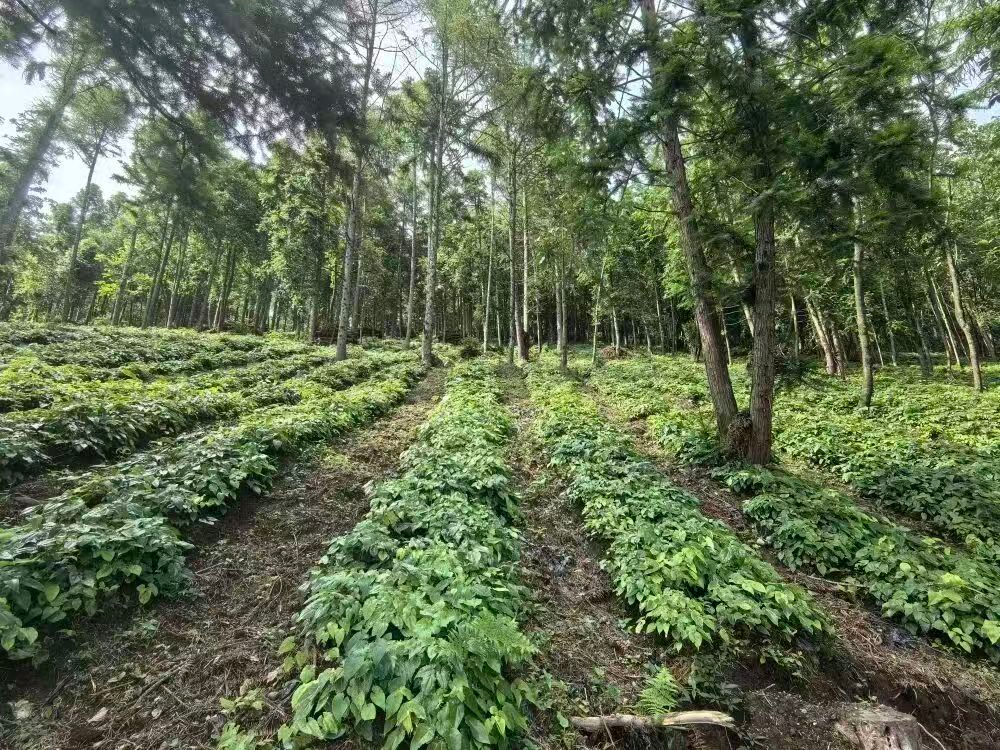 Patches of herbal medicinal herbs grow under forests in Wufeng. Photo by Tian Zhongquan, Xinhua News Agency.
Wufeng's "forest-herb-bee" model covers more than 40,000 mu, including 20,000 mu of medicinal herbs. Annual output exceeds 80 million yuan. The model has been recognized as one of the world's best poverty reduction cases.
In Dangyang, upgraded improved resin-tapping technology has increased the income of nearly 800 forest farmers by an average of 4,500 yuan per person.
Wufeng Chicheng Biotechnology Co., Ltd. promotes this three-dimensional farming model across the county. More than 2,000 local households take part. The company develops high-value products such as gallnut skincare and gastrodia medicinal meals.
Yichang plans to build 73 under-forest economy demonstration bases by 2035.
The city aims to expand woodland used for under-forest economic activities to more than 3 million mu, with annual output exceeding 20 billion yuan. It also plans to extend industry chains and use technology to turn its ecological resources into more stable sources of income for rural residents.
Jie Xingwei Wang Zi and Luo Yuzhe also contributed to this story.
In Dangyang, upgraded improved resin-tapping technology has increased the income of nearly 800 forest farmers by an average of 4,500 yuan per person.
Wufeng Chicheng Biotechnology Co., Ltd. promotes this three-dimensional farming model across the county. More than 2,000 local households take part. The company develops high-value products such as gallnut skincare and gastrodia medicinal meals.
Yichang plans to build 73 under-forest economy demonstration bases by 2035.
The city aims to expand woodland used for under-forest economic activities to more than 3 million mu, with annual output exceeding 20 billion yuan. It also plans to extend industry chains and use technology to turn its ecological resources into more stable sources of income for rural residents.
Jie Xingwei Wang Zi and Luo Yuzhe also contributed to this story.