1,905 Chinese salamanders released into wild
2026-10-11 18:10:08
By Ma Yuanchen.
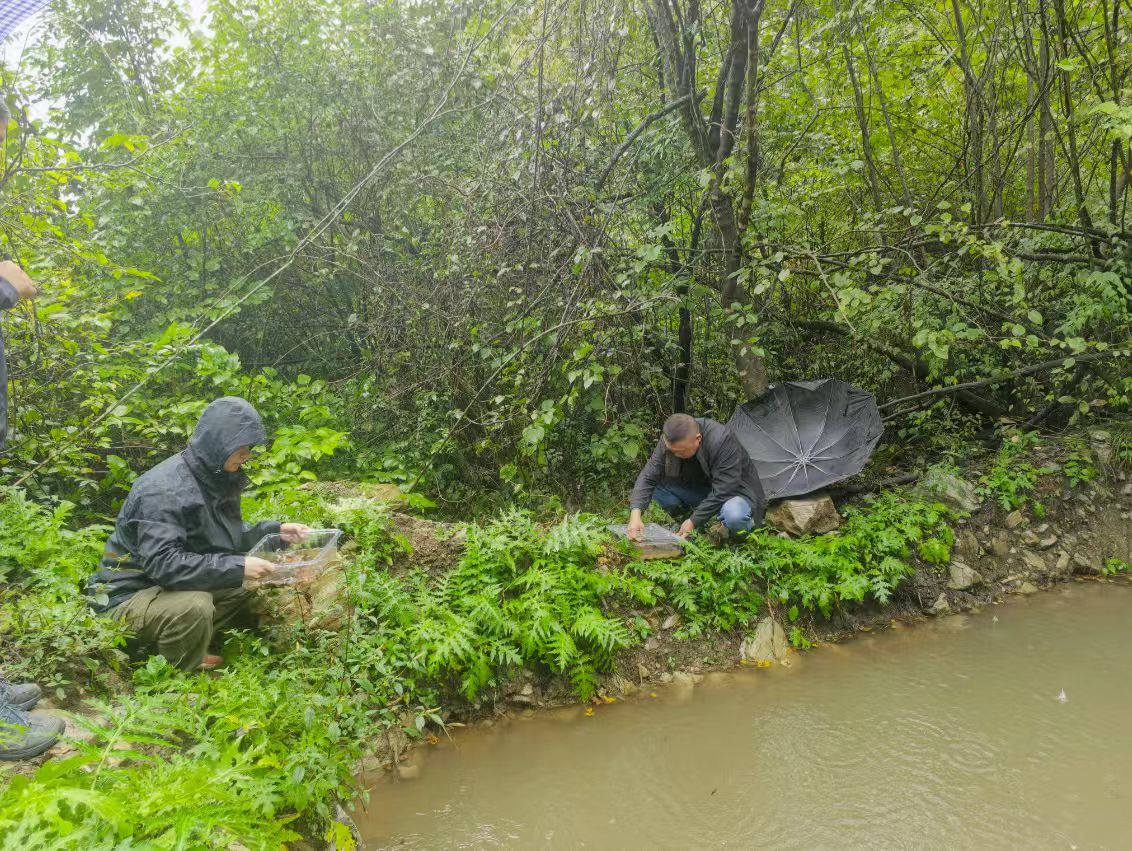
Yichang’s Bengjianzi National Nature Reserve released 1,905 captive-bred sub-adult Chinese salamanders into the wild on October 9.
However, its habitat has deteriorated mostly due to agricultural activities. Some ponds lack suitable surfaces for egg attachment. Assisted breeding and reintroduction into the wild have therefore become important conservation measures.
Working with technical teams from universities, the Bengjianzi National Nature Reserve Administration launched an artificial breeding program earlier this year. In March, technicians collected 25 pairs of wild egg masses and raised the larvae in an environment designed to simulate their natural habitat. They carefully controlled water temperature, oxygen levels, and lighting while managing feeding, water quality, and disease prevention. By September 30, they had successfully raised 1,905 sub-adult salamanders.
"The large-scale release not only boosts regional biodiversity and maintains ecosystem structure and function but also accumulates key research data and practical experience for Chinese small salamander conservation," said Wei Zhide, head of the Bengjianzi National Nature Reserve Administration. "It provides a Chinese approach for global endangered amphibian protection."
The reserve plans to establish a long-term monitoring system to track the survival, movement, and natural reproduction of the released salamanders. It will also strengthen habitat protection, limit human disturbance, and improve breeding and reintroduction techniques to support the recovery of the wild population.
Dong Xiaobin, Xi Qian, and Guo Hongjiao also contributed to this story.
Yichang’s Bengjianzi National Nature Reserve released 1,905 captive-bred sub-adult Chinese salamanders into the wild on October 9.
<caption>Staff members from the Bengjianzi National Nature Reserve Administration release Chinese salamanders into the wild.
Endemic to Yichang’s Changyang District, the Chinese salamander is classified as a Class I nationally protected species. First documented in Changyang in 1889, the species has an evolutionary history of more than 300 million years and is considered a "living fossil.”However, its habitat has deteriorated mostly due to agricultural activities. Some ponds lack suitable surfaces for egg attachment. Assisted breeding and reintroduction into the wild have therefore become important conservation measures.
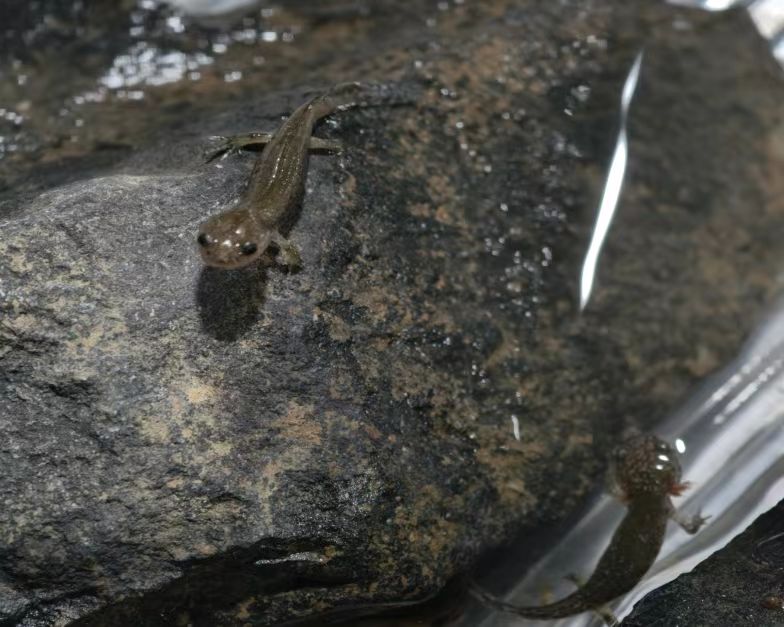
Working with technical teams from universities, the Bengjianzi National Nature Reserve Administration launched an artificial breeding program earlier this year. In March, technicians collected 25 pairs of wild egg masses and raised the larvae in an environment designed to simulate their natural habitat. They carefully controlled water temperature, oxygen levels, and lighting while managing feeding, water quality, and disease prevention. By September 30, they had successfully raised 1,905 sub-adult salamanders.
<caption>Sub-adult Chinese salamanders.
The salamanders were released at five locations in the reserve’s core zone, at elevations ranging from 1,450 to 1,750 meters. Researchers surveyed the sites in advance to ensure they had stable, year-round water supplies, natural shelters such as humus-rich soil and rock crevices, and minimal human disturbance. These conditions provide suitable habitats for the salamanders to survive and reproduce."The large-scale release not only boosts regional biodiversity and maintains ecosystem structure and function but also accumulates key research data and practical experience for Chinese small salamander conservation," said Wei Zhide, head of the Bengjianzi National Nature Reserve Administration. "It provides a Chinese approach for global endangered amphibian protection."
The reserve plans to establish a long-term monitoring system to track the survival, movement, and natural reproduction of the released salamanders. It will also strengthen habitat protection, limit human disturbance, and improve breeding and reintroduction techniques to support the recovery of the wild population.
Dong Xiaobin, Xi Qian, and Guo Hongjiao also contributed to this story.