
Village advances toward zero-carbon future through circular agriculture
2026-10-14 19:10:18
By Yan Wanqin.
Yepanping Village in Yichang has turned pig manure into biogas, fertilizer, and electricity, advancing its zero-carbon goal through circular agriculture.
The initiative is part of the village's participation in the "Enabling Zero Carbon Energy in Rural Towns and Villages in China Project," for which Yepanping was selected as a pilot village in 2025.
Located at an average elevation of about 600 meters, with forest coverage exceeding 85 percent, Yepanping was once a deeply impoverished village with only 2 mu (0.13 hectare) of arable land per capita. Pig farming became a major source of income for residents. Over the past decade, villagers have expanded their herds while developing a circular farming model in which manure is fermented in biogas pits, the resulting gas is used as household fuel, and the slurry is returned to the fields as fertilizer.
"We use biogas for heating and cooking. It’s cleaner and saves us money," said Qin Yajuan, a local villager.
Larger pig farms have built bigger biogas pits. Lu Hua, who has 15 years of farming experience and raises more than 300 pigs, uses a 200-cubic-meter pit to process manure. Wan Song, who raises pigs under contract and earns 180,000 yuan (US$26,896) annually, uses slurry and residue from his 50-cubic-meter pit to fertilize more than 50 mu of tea plantations and medicinal herb fields.
Villager Li Ziliang separates manure into solid and liquid components. The solids are used to breed earthworms, generating over 100,000 yuan a year, while the liquid is processed in a 200-cubic-meter biogas pit.
"All 603 households and 1,850 residents raise pigs and have built biogas pits," said Peng Yetao, the village's Party secretary. "Manure must be safely treated before being returned to the fields. This is essential to protecting the rural environment."
Yepanping Village in Yichang has turned pig manure into biogas, fertilizer, and electricity, advancing its zero-carbon goal through circular agriculture.
The initiative is part of the village's participation in the "Enabling Zero Carbon Energy in Rural Towns and Villages in China Project," for which Yepanping was selected as a pilot village in 2025.
Located at an average elevation of about 600 meters, with forest coverage exceeding 85 percent, Yepanping was once a deeply impoverished village with only 2 mu (0.13 hectare) of arable land per capita. Pig farming became a major source of income for residents. Over the past decade, villagers have expanded their herds while developing a circular farming model in which manure is fermented in biogas pits, the resulting gas is used as household fuel, and the slurry is returned to the fields as fertilizer.
"We use biogas for heating and cooking. It’s cleaner and saves us money," said Qin Yajuan, a local villager.
Larger pig farms have built bigger biogas pits. Lu Hua, who has 15 years of farming experience and raises more than 300 pigs, uses a 200-cubic-meter pit to process manure. Wan Song, who raises pigs under contract and earns 180,000 yuan (US$26,896) annually, uses slurry and residue from his 50-cubic-meter pit to fertilize more than 50 mu of tea plantations and medicinal herb fields.
Villager Li Ziliang separates manure into solid and liquid components. The solids are used to breed earthworms, generating over 100,000 yuan a year, while the liquid is processed in a 200-cubic-meter biogas pit.
"All 603 households and 1,850 residents raise pigs and have built biogas pits," said Peng Yetao, the village's Party secretary. "Manure must be safely treated before being returned to the fields. This is essential to protecting the rural environment."
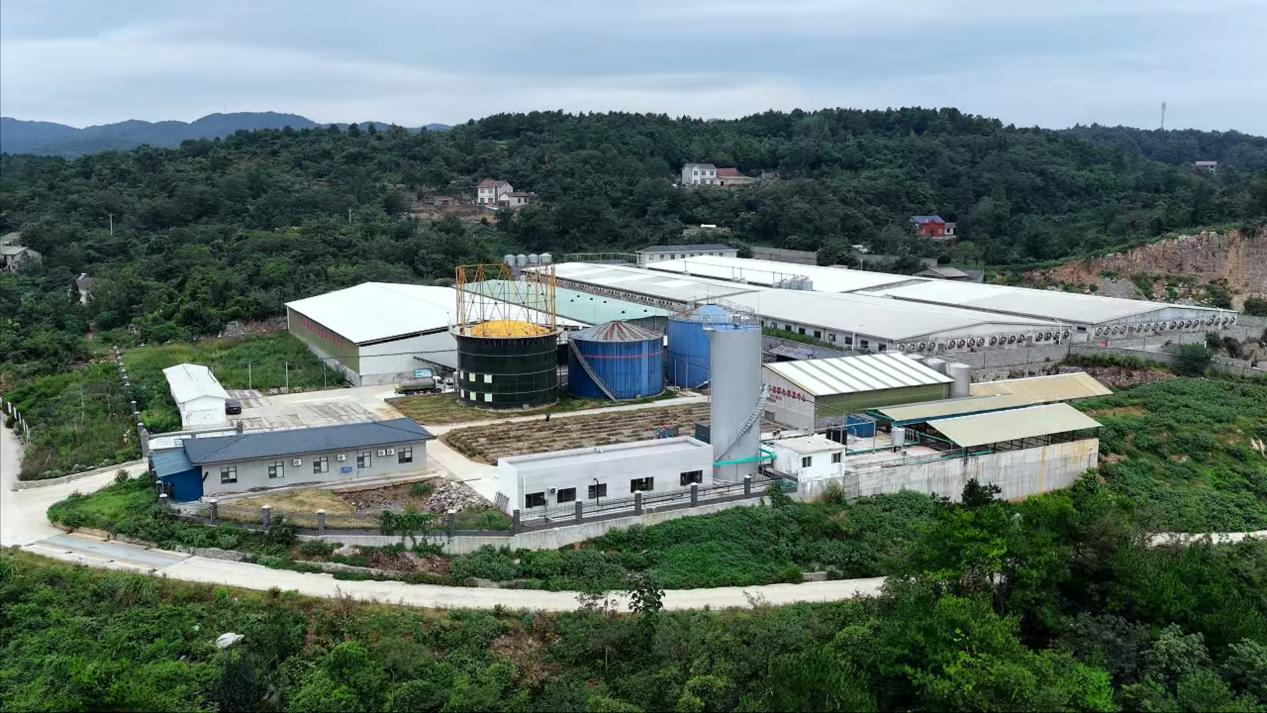
The Agricultural Waste Recycling Center in Yepanping Village.
The village's zero-carbon practices have evolved from scattered household efforts to standardized, large-scale operations. In October 2022, a modern ecological pig farm was built on a mountain peak in the village. A 100-mu ecological industrial park now integrates manure collection, anaerobic fermentation, biogas power generation, organic fertilizer processing, and base planting.
The farm spans 30 mu of standardized breeding facilities and raises more than 30,000 pigs for sale annually. It is a key ecological agriculture project supported by local investment promotion efforts. The government invested 15 million yuan to build an adjacent agricultural waste recycling center capable of processing 30,000 tons of manure annually.
Manure undergoes anaerobic fermentation in three 1,000-cubic-meter tanks, producing 3 million cubic meters of biogas a year. Generators at the park convert the biogas into 900,000 kWh of electricity annually, with surplus power sold to the national grid. After solid-liquid separation, the solid residue is processed into commercial organic fertilizer, while the liquid undergoes four-stage filtration and enzyme treatment to become water-soluble organic fertilizer, which is delivered to fields through pipelines.
The industrial park supplies organic fertilizer to the village's tea plantations, which have expanded from 1,000 mu to 2,600 mu. In 2025, the village's collective economic income exceeded 500,000 yuan for the first time.
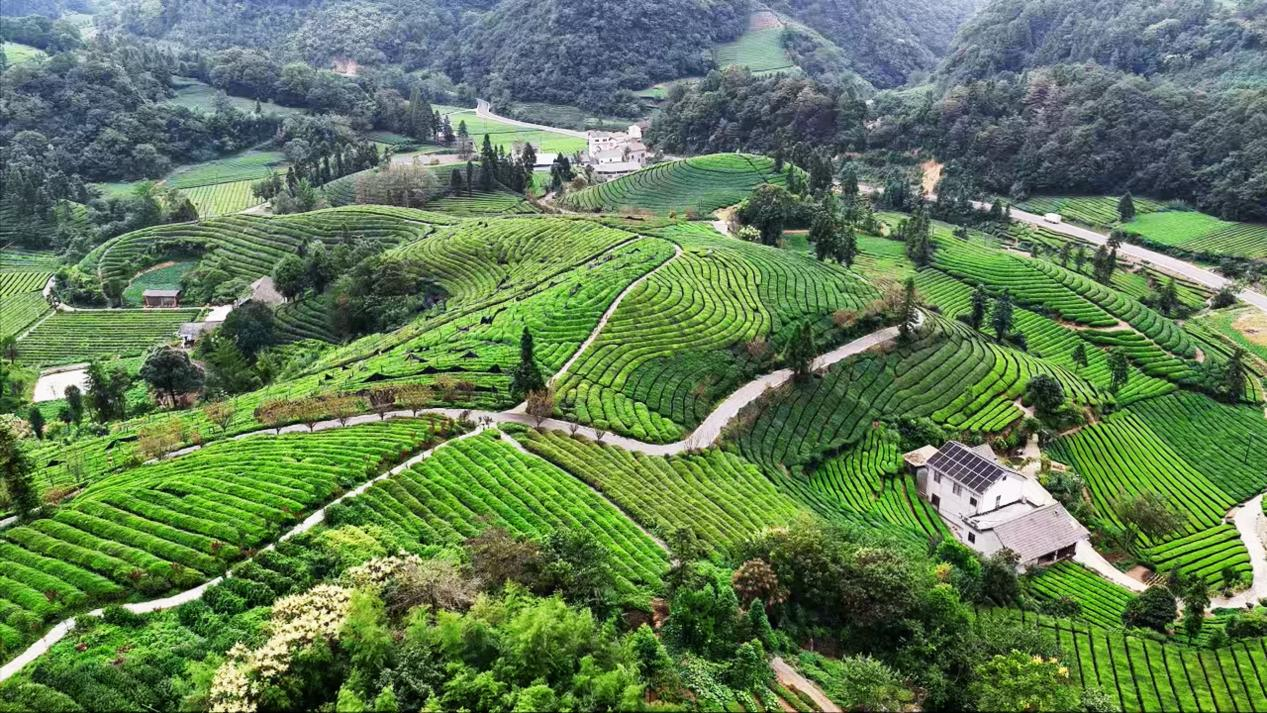
An ecological tea garden in Yepanping Village.
Beyond converting waste into fertilizer and electricity, the village is also expanding its use of clean energy in daily life. This year, 200 solar streetlights were installed at a total cost of 600,000 yuan.
"The village has installed more than 50 additional solar streetlights. Now it's bright when we walk or take a stroll at night, making it much more convenient," said Chen Xianzhen, a local villager.
With solar panels installed on rooftops, barren slopes and idle land, solar power generation now reaches more than seven times the village's electricity consumption, laying a solid foundation for its zero-carbon goal.
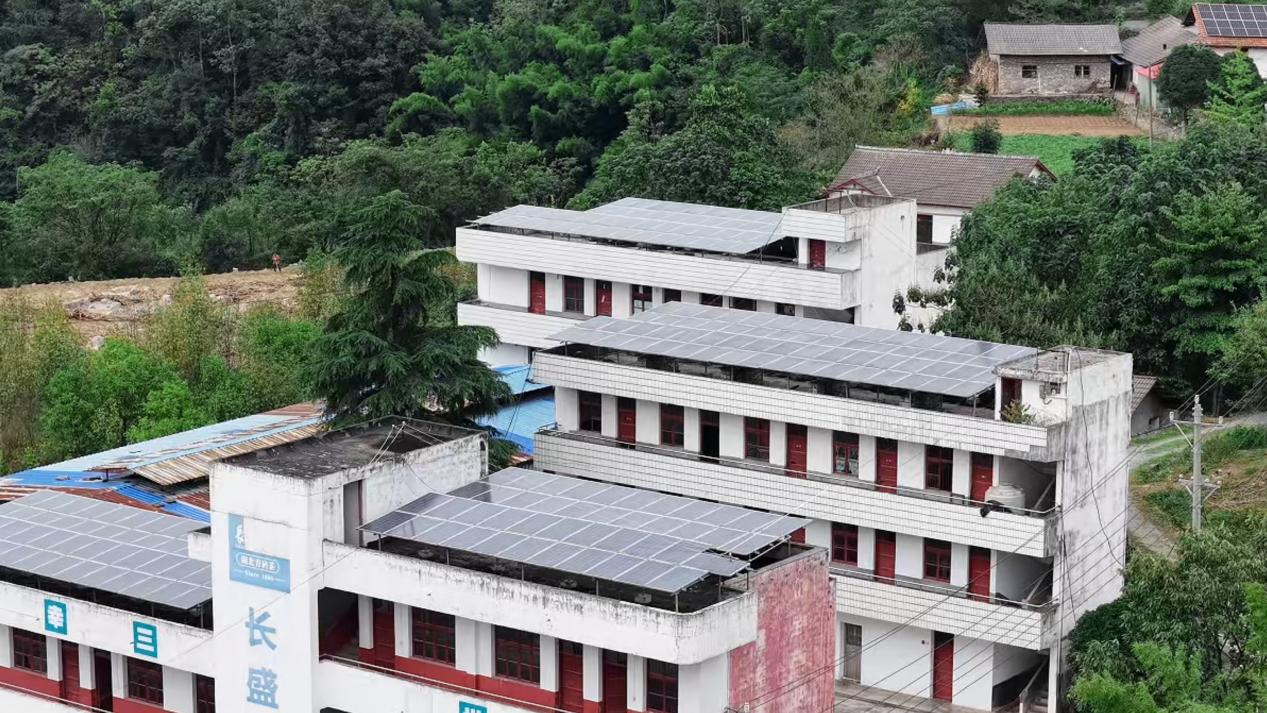
Solar panels installed on rooftops in Yepanping Village.
Aiming for zero carbon, the village is focusing on clean energy utilization, ecological governance and industrial upgrading, advancing nine key projects including biogas facility improvements and energy-efficient building renovations. A 3,000-cubic-meter fermentation tank will be added at the recycling center to significantly boost biogas capacity.
Meanwhile, a 4.5-million-yuan reclaimed water project has been put into operation.
"Our reclaimed water project can treat biogas slurry to produce reclaimed water for laundry, irrigation, vehicle refilling, and reuse in the plant," Peng said.
Next, the village will build a zero-carbon science education base to encourage surrounding villages to participate in zero-carbon development.