Yichang upgrades tea industry to boost value
2026-10-23 20:10:00
By Gao Qing
Yichang is upgrading its tea industry through improved cultivation and management practices, helping local farmers increase their incomes and generate greater value from their harvests.
“Fresh tea leaves now fetch an additional 0.2 to 0.3 yuan per jin (500 grams),” said Guo Mingquan, the Party secretary of Yangjiawan Village.
The process begins with standardized cultivation. Local authorities and Yicha Group have launched a pilot project covering 4,000 mu (about 267 hectares) of tea gardens managed to EU standards.
By standardizing fertilization and cultivation practices, the project ensures traceability and quality at the source, delivering higher returns for farmers.
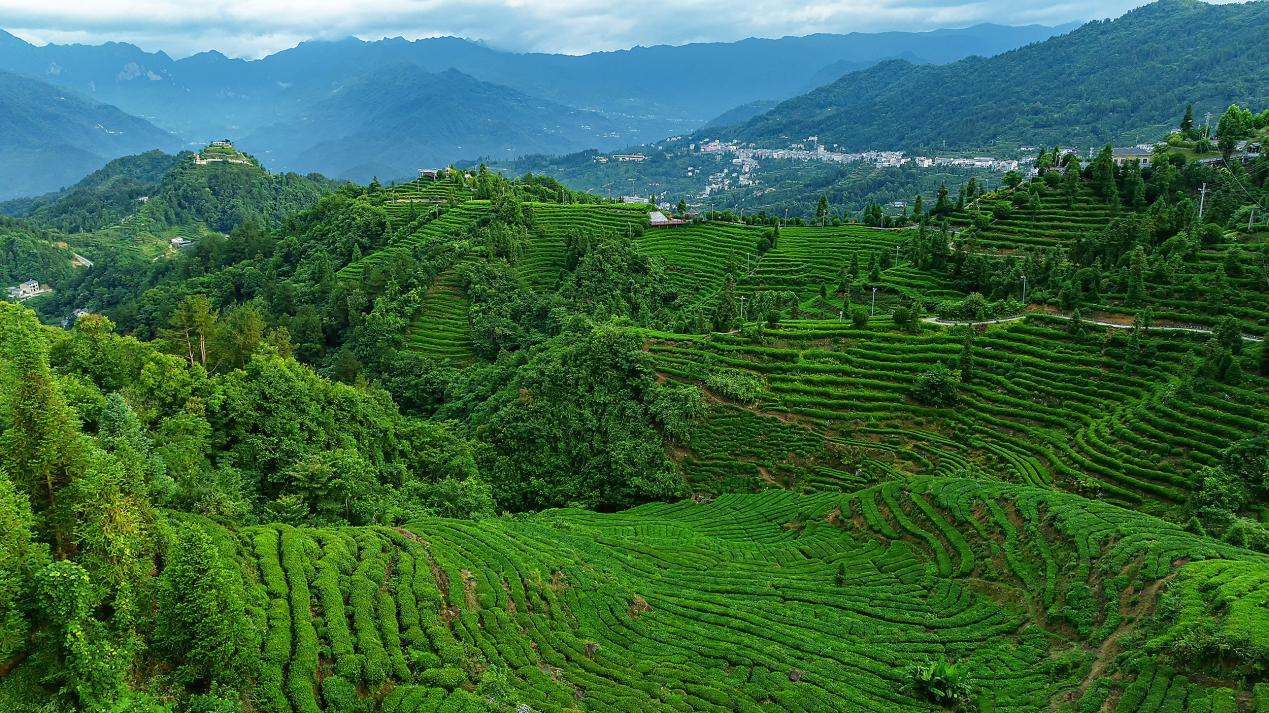 A view of a tea garden in Dengcun Township. Photo by Yan Zhengrong
Smart processing is another key step. At a smart tea factory in Dengcun, automated production lines process several types of green tea, including pan-fired, baked and pan-roasted varieties, from initial processing to packaging. Unlike traditional methods that depend heavily on individual expertise, automated production helps ensure consistent quality and increase the value of finished tea products.
Branding and product innovation are also strengthening the industry. Yihong Congou black tea and Yichang Maojian green tea, two of the city’s signature products, are produced under unified standards. In 2025, Yihong Congou tea was named one of China’s Famous Consumer Products by the Ministry of Industry and Information Technology, with a brand value of 8.652 billion yuan (about US$1.27 billion).
Yichang now has 1 million mu (about 67,000 hectares) of tea plantations, an annual output of 130,000 tons, more than 1,200 tea processors, and over 50 smart production lines. Upgrades across the entire industry chain have turned tea into a stable source of income for local residents.
Hu Weilong contributed to this story.