Yichang expands use of industrial byproduct in road construction
2026-11-14 19:11:43
By Yan Wanqin
More than 200 road projects in Yichang have used phosphogypsum-based materials to build road bases, covering a total length of more than 100 kilometers, as the city seeks to recycle industrial solid waste.
Phosphogypsum is an industrial byproduct of phosphoric acid production, a key part of fertilizer manufacturing. It has traditionally been treated as industrial solid waste. Yichang, which has rich reserves of phosphorus ore, is a major phosphorus chemical base and a national base for the comprehensive utilization of industrial resources.
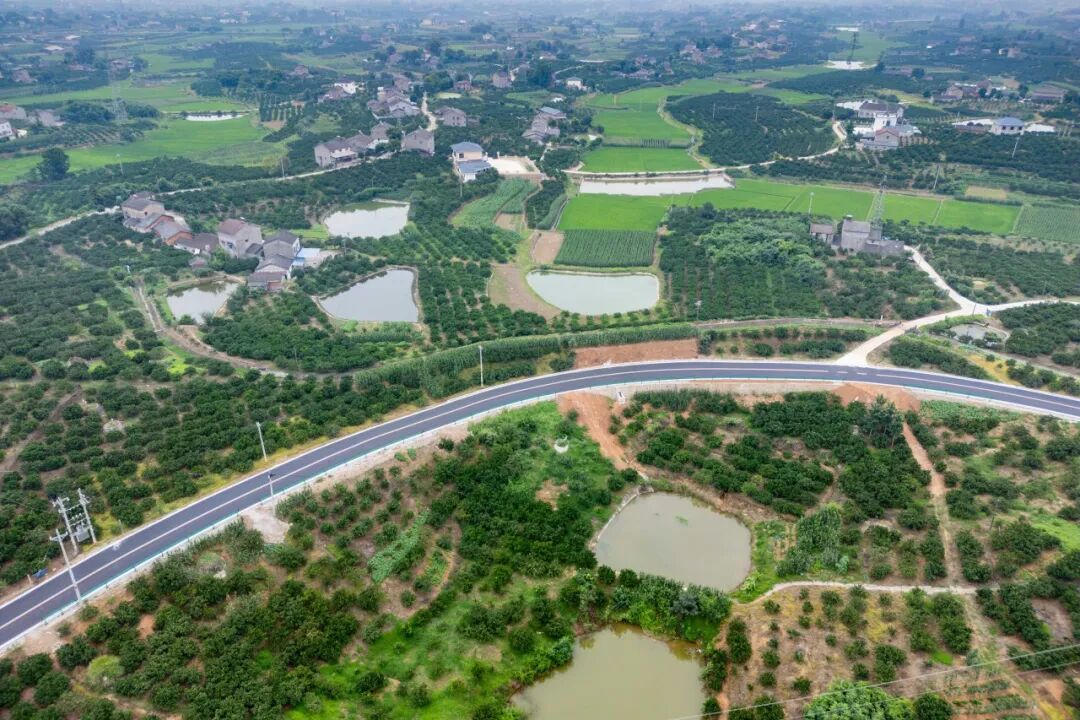
More than 200 road projects in Yichang have used phosphogypsum-based materials to build road bases, covering a total length of more than 100 kilometers, as the city seeks to recycle industrial solid waste.
Phosphogypsum is an industrial byproduct of phosphoric acid production, a key part of fertilizer manufacturing. It has traditionally been treated as industrial solid waste. Yichang, which has rich reserves of phosphorus ore, is a major phosphorus chemical base and a national base for the comprehensive utilization of industrial resources.
On Meihuang Road in Yiling District, a 4.1-kilometer section has been paved with phosphogypsum-based stabilization material.
Yichang has been expanding applications for phosphogypsum and promoting its large-scale industrial use. At Hubei Linlong New Materials Technology Co., phosphogypsum is processed through crushing, roasting, modification, mixing, granulation, curing, and polishing to produce a new type of lightweight aggregate.
In traditional processes, phosphogypsum could only partially substitute for cement. At the company, it can now be made into lightweight aggregate to replace crushed stone and used as a cementitious material to replace cement in road base layers.
“The utilization rate of phosphogypsum in this process has risen from 10 percent to 50 percent,” said Yi Ren’an, deputy general manager of the company.
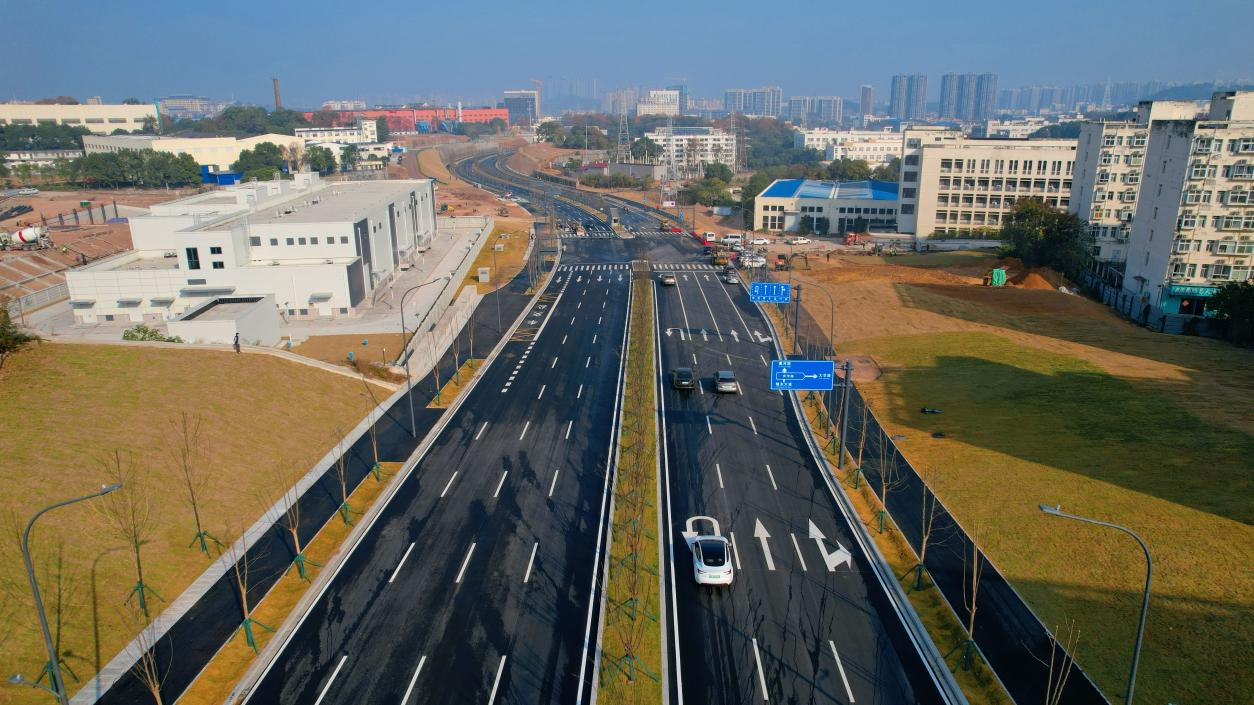
Daxue Road in Xiling District, Yichang.
Daxue Road in Xiling District is 2,110 meters long. Its construction used about 28,000 tons of phosphogypsum-based road base stabilization material, consuming 12,700 tons of phosphogypsum and achieving a comprehensive utilization rate of 45 percent. According to estimates, each kilometer of a Class I highway using phosphogypsum lightweight aggregate base material can consume about 16,000 tons of phosphogypsum and reduce carbon emissions by 3,647.5 tons.
Yi said eight key projects in the city are currently using the company’s phosphogypsum road base materials.
The high-volume use of phosphogypsum has been supported by collaboration among industry, academia and research institutes. Changyao New Materials, Linlong’s parent company, has developed a range of phosphogypsum products with several universities and research institutes. These include phosphogypsum concrete, phosphogypsum-based road base stabilization material, lightweight aggregate, ecological slope protection materials, curbs, pavement bricks, and garden decorative products.
In June, Changyao New Materials signed a cooperation agreement with Huazhong University of Science and Technology to conduct research on high-performance concrete based on modified lightweight phosphogypsum aggregates.
“The project is currently underway. We hope to achieve low-cost, high-dosage and high-performance utilization of phosphogypsum as a resource through technological innovation,” said Tang Tao, deputy director of the company’s technology research and development department.
From January to October this year, Changyao New Materials generated more than 14 million yuan (US$2.09 million) in revenue from phosphogypsum road base materials, utilizing 95,000 tons of phosphogypsum.
Zhao Jingyi, Jin Dan also contributed to the story.