High-altitude herb industry boosts farmers’ income
2026-11-24 19:11:04
By Zhou Chunyi
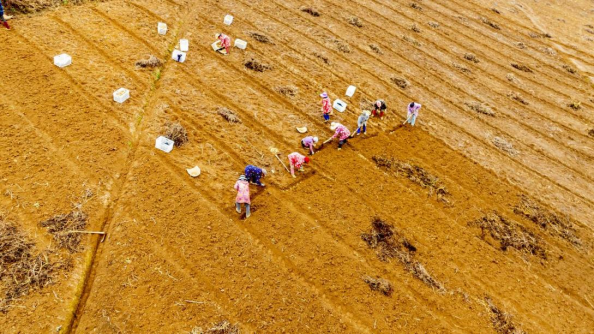
Workers plant edible lilies at the Baijia Family Farm in Yunfeng Village. Photo by Zhou Shiwei.
On November 19, villagers in Yunfeng Village at an altitude of nearly 1,800 meters were busy planting herbs. In late 2019, Wang Junyi and his wife returned to their hometown and established the Baijia Family Farm, covering more than 1,200 mu of land.
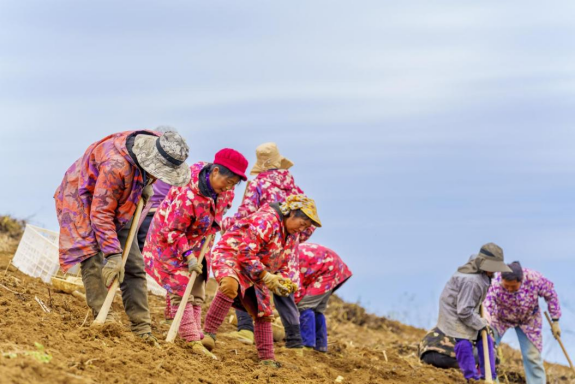
Workers plant edible lilies at the farm. Photo by Zhou Shiwei.
Wang said the local microclimate is ideal for herbs such as Codonopsis pilosula (党参) and Aucklandia lappa (木香). To further scale up, the farm uses Forsythia suspensa (连翘) as a key crop to connect with five surrounding villages, expanding the total planting area to more than 1,800 mu. Across Yanglinqiao Town, 10,550 mu of land is used to plant 29 varieties of medicinal herbs.
To ensure quality, the farm harvests herbs like Angelicae Pubescentis Radix (独活) strictly after the Chinese solar term Frost's Descent, using low-temperature drying to preserve active ingredients. It also practices staggered harvesting to mitigate market price fluctuations.
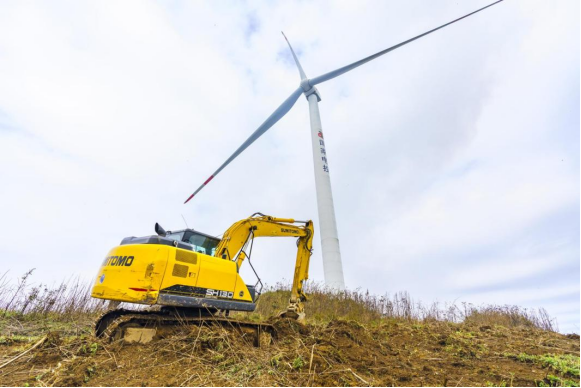
An excavator harvests Angelicae Pubescentis Radix at the farm. Photo by Zhou Shiwei.
Beyond planting, the farm has extended its industrial chain to boost added value. Wang leased a village-owned processing factory and built four production lines with an annual processing capacity of 300 tons. In the past two years, the farm has harvested over 1,000 tons of herbs annually, generating around 10 million yuan in sales. Primary processing makes the herbs easier to store and significantly increases their market value.
The industry also provides stable local employment. Villager Xiang Shiyou, 68, and his wife have worked at the farm since it was established, earning 60,000 to 70,000 yuan combined annually. "It's hard to find jobs elsewhere at our age. The farm provides us with food and transport, which is a big help," Xiang said.
The farm employs 31 locals year-round and more than 50 during peak seasons, paying out more than 1.2 million yuan in wages each year. It also distributes free seedlings and handles sales channels for farmers, allowing them to earn from land rent, local wages and their own harvests.
Looking ahead, Wang plans to integrate the herb industry with tourism and wellness. From March to August, herbs like Forsythia suspensa (连翘) and lilies bloom in succession. The farm aims to develop herbal cuisine, wellness experiences and educational agricultural tours to further expand its business.
Hu Xingjun, Li Caiyun and Du Tengfei also contributed to this story.
According to Traditional Chinese Medicine theory, the medicinal herbs mentioned in the article have the following functions:
Codonopsis pilosula (党参): Strengthens the spleen and lungs, nourishes the blood and promotes body fluid production
Aucklandia lappa (木香): Relieves pain by promoting the flow of “qi”, and aids digestion by strengthening the spleen.
Forsythia suspensa (连翘): Helps clear heat and detoxify the body, reduces swelling and lumps, and relieves wind-heat conditions such as wind-heat colds.
Angelicae Pubescentis Radix (独活): Relieves joint and muscle pain caused by wind-dampness by dispelling wind, removing dampness, and unblocking obstruction.
Yanglinqiao Town has developed a high-altitude medicinal herb industry spanning over 10,000 mu (667 hectares). The industry has boosted the income of more than 1,000 local villagers, while a local family farm has generated around 10 million yuan (US$1.5 million) in annual sales.
Workers plant edible lilies at the Baijia Family Farm in Yunfeng Village. Photo by Zhou Shiwei.
On November 19, villagers in Yunfeng Village at an altitude of nearly 1,800 meters were busy planting herbs. In late 2019, Wang Junyi and his wife returned to their hometown and established the Baijia Family Farm, covering more than 1,200 mu of land.
Workers plant edible lilies at the farm. Photo by Zhou Shiwei.
Wang said the local microclimate is ideal for herbs such as Codonopsis pilosula (党参) and Aucklandia lappa (木香). To further scale up, the farm uses Forsythia suspensa (连翘) as a key crop to connect with five surrounding villages, expanding the total planting area to more than 1,800 mu. Across Yanglinqiao Town, 10,550 mu of land is used to plant 29 varieties of medicinal herbs.
To ensure quality, the farm harvests herbs like Angelicae Pubescentis Radix (独活) strictly after the Chinese solar term Frost's Descent, using low-temperature drying to preserve active ingredients. It also practices staggered harvesting to mitigate market price fluctuations.
An excavator harvests Angelicae Pubescentis Radix at the farm. Photo by Zhou Shiwei.
Beyond planting, the farm has extended its industrial chain to boost added value. Wang leased a village-owned processing factory and built four production lines with an annual processing capacity of 300 tons. In the past two years, the farm has harvested over 1,000 tons of herbs annually, generating around 10 million yuan in sales. Primary processing makes the herbs easier to store and significantly increases their market value.
The industry also provides stable local employment. Villager Xiang Shiyou, 68, and his wife have worked at the farm since it was established, earning 60,000 to 70,000 yuan combined annually. "It's hard to find jobs elsewhere at our age. The farm provides us with food and transport, which is a big help," Xiang said.
The farm employs 31 locals year-round and more than 50 during peak seasons, paying out more than 1.2 million yuan in wages each year. It also distributes free seedlings and handles sales channels for farmers, allowing them to earn from land rent, local wages and their own harvests.
Looking ahead, Wang plans to integrate the herb industry with tourism and wellness. From March to August, herbs like Forsythia suspensa (连翘) and lilies bloom in succession. The farm aims to develop herbal cuisine, wellness experiences and educational agricultural tours to further expand its business.
Hu Xingjun, Li Caiyun and Du Tengfei also contributed to this story.
According to Traditional Chinese Medicine theory, the medicinal herbs mentioned in the article have the following functions:
Codonopsis pilosula (党参): Strengthens the spleen and lungs, nourishes the blood and promotes body fluid production
Aucklandia lappa (木香): Relieves pain by promoting the flow of “qi”, and aids digestion by strengthening the spleen.
Forsythia suspensa (连翘): Helps clear heat and detoxify the body, reduces swelling and lumps, and relieves wind-heat conditions such as wind-heat colds.
Angelicae Pubescentis Radix (独活): Relieves joint and muscle pain caused by wind-dampness by dispelling wind, removing dampness, and unblocking obstruction.