A Case Study of Industry-Education Integration at Xingshan Vocational Education Center
2026-09-17 13:09:17
"Three Duals and Three Co-constructions": Pooling School-Enterprise Strengths, Cultivating Local Talent Through Industry-Education Integration
I. Background and Challenges
Founded in 1983, Xingshan Vocational Education Center is a national key secondary vocational school. Rooted in the economic realities of Xingshan County, the school closely aligns with the county’s industrial development needs, focuses on the leading fine phosphorus chemical industry of Xingfa Group (a leading local enterprise), and continuously deepens school-enterprise collaborative talent development and industry-education integration. As a national leader in the fine phosphorus chemical industry, Xingfa Group is based in Xingshan with a nationwide footprint. With its expanding industrial scale and accelerating industrial upgrading, its demand for local, stable, highly skilled, and well-suited technical talent has been rising year by year, providing solid industrial support and a broad range of practical learning settings for the school to deepen industry-education integration.
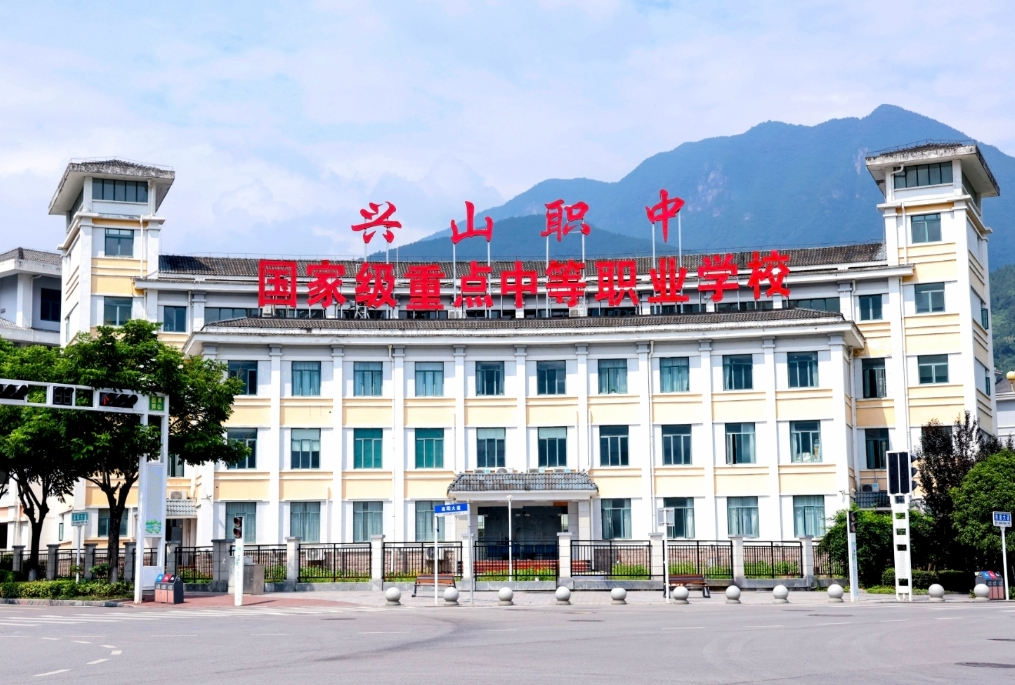
Main Entrance of Xingshan Vocational Education Center
Constrained by objective factors such as mountainous terrain and resource constraints, the school still faces practical challenges to be addressed:
First, on-campus training conditions need improvement, with slow equipment updates and a gap between its equipment and the latest technologies and processes used by enterprises.
Second, talent cultivation is not sufficiently aligned with job standards, and the alignment between learning and workplace application needs to be enhanced.
Third, full-time teachers lack sufficient industrial practice experience, and their front-line practical experience needs to be strengthened.
Fourth, there are limited growth channels for skilled talent: students have few pathways to higher education, and local opportunities for enterprise employees to improve their academic qualifications and skills are insufficient.
Fifth, some graduates seek employment outside the county, putting pressure on the skilled-talent pool available to local enterprises.
Leveraging the county’s industrial-resource strengths, Xingshan Vocational Education Center and Xingfa Group have worked to build a close-knit school-enterprise community with a shared future. They have introduced the "Three Duals and Three Co-constructions" industry-education integration model, actively addressing various practical difficulties in the development of industry-education integration at mountainous secondary vocational schools, linking the education, talent, and industry chains, and cultivating and delivering local skilled talent for local industries.
II. Practices and Innovations
Xingshan Vocational Education Center has innovatively constructed the "Three Duals and Three Co-constructions" industry-education integration model: dual- identity learning, dual-base practical training, dual-mentor teaching; joint development of training programs, joint development of curriculum systems, joint participation in recruitment and enrollment. The model implements modern apprenticeship and order-based training, promotes the integration of job roles, curricula, competitions, and certifications, and explores a replicable and scalable approach to talent development. Specific measures are as follows:
(I)Implementing dual-identity training to strengthen the foundation for local employment
Upon enrollment, students sign a tripartite training agreement with the school and Xingfa Group, holding the dual identities of "student and prospective employee of the enterprise.” In addition to national vocational education subsidies, students can receive special living allowances from the enterprise, regularly participate in on-the-job training and skill competitions, build professional awareness in advance, and enhance their sense of professional commitment to serving local enterprises. Xingfa Group fully covers the tuition fees, textbooks, and related living expenses for students in the “order-based classes.” Specifically, secondary vocational students can receive a monthly living allowance of 600 yuan (US$88), while students in the secondary-to-higher-vocational integrated program can receive 1,000 yuan per month. After being formally employed, they are eligible for a special housing subsidy of 120,000 yuan.
First, on-campus training conditions need improvement, with slow equipment updates and a gap between its equipment and the latest technologies and processes used by enterprises.
Second, talent cultivation is not sufficiently aligned with job standards, and the alignment between learning and workplace application needs to be enhanced.
Third, full-time teachers lack sufficient industrial practice experience, and their front-line practical experience needs to be strengthened.
Fourth, there are limited growth channels for skilled talent: students have few pathways to higher education, and local opportunities for enterprise employees to improve their academic qualifications and skills are insufficient.
Fifth, some graduates seek employment outside the county, putting pressure on the skilled-talent pool available to local enterprises.
Leveraging the county’s industrial-resource strengths, Xingshan Vocational Education Center and Xingfa Group have worked to build a close-knit school-enterprise community with a shared future. They have introduced the "Three Duals and Three Co-constructions" industry-education integration model, actively addressing various practical difficulties in the development of industry-education integration at mountainous secondary vocational schools, linking the education, talent, and industry chains, and cultivating and delivering local skilled talent for local industries.
II. Practices and Innovations
Xingshan Vocational Education Center has innovatively constructed the "Three Duals and Three Co-constructions" industry-education integration model: dual- identity learning, dual-base practical training, dual-mentor teaching; joint development of training programs, joint development of curriculum systems, joint participation in recruitment and enrollment. The model implements modern apprenticeship and order-based training, promotes the integration of job roles, curricula, competitions, and certifications, and explores a replicable and scalable approach to talent development. Specific measures are as follows:
(I)Implementing dual-identity training to strengthen the foundation for local employment
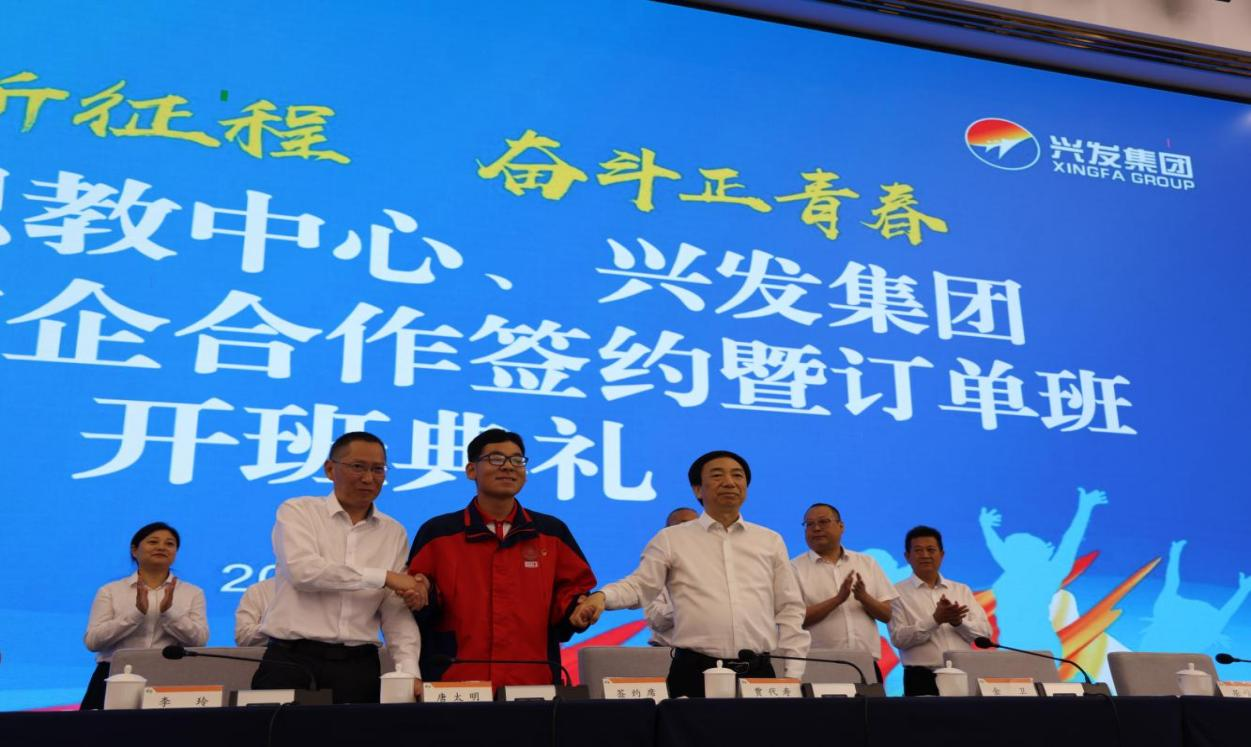
Upon enrollment, students sign a tripartite training agreement with the school and Xingfa Group, holding the dual identities of "student and prospective employee of the enterprise.” In addition to national vocational education subsidies, students can receive special living allowances from the enterprise, regularly participate in on-the-job training and skill competitions, build professional awareness in advance, and enhance their sense of professional commitment to serving local enterprises. Xingfa Group fully covers the tuition fees, textbooks, and related living expenses for students in the “order-based classes.” Specifically, secondary vocational students can receive a monthly living allowance of 600 yuan (US$88), while students in the secondary-to-higher-vocational integrated program can receive 1,000 yuan per month. After being formally employed, they are eligible for a special housing subsidy of 120,000 yuan.
Signing Ceremony for an Order-Based Class with Xingfa Group
(II) Building dual practice bases to address training-resource shortages in mountainous areas
Xingfa Group has invested more than 3.7 million yuan to build one training center on campus with 12 specialized training rooms (including chemical rectification, intelligent simulation, and instrument operation), and 13 off-campus training bases, relying on the company’s industrial settings, including mines and fine chemical production. This system realizes "basic skills training on campus, practical operation training off campus,” creates a practical pathway for students from "school gate" to "factory gate,” and addresses the challenge of training equipment lagging behind industrial technology.
(III) Implementing dual-mentor teaching to strengthen the teaching team
A three-dimensional faculty framework of "expert leadership + dual-teacher guidance + enterprise empowerment" has been established, forming a dual-mentor team of "on-campus professional teachers + enterprise technical experts.” The school organizes teachers to take up posts in enterprises for practical training, and has recruited 16 enterprise technical experts and Jingchu Craftsmen (including Zhang Lang, Safety Director of Hubei Xingshun New Materials Co., Ltd.) into the part-time teacher resource pool. The team collaborates in theoretical teaching and practical guidance, thereby achieving the in-depth integration of theoretical teaching and industrial practice.
(IV) Deepening the "Three Co-constructions" collaborative mechanism to achieve closer alignment between industry and education
Joint development of training programs: 25 enterprise experts are invited to join the Program Development Steering Committee to dynamically revise talent training programs, and implement the "six alignments" (e.g., program positioning aligned with industrial development, training objectives aligned with job requirements).
Joint development of curriculum systems: The school and enterprises jointly develop school textbooks such as Chemical Analysis and Phosphorus Chemical Technology, build high-quality courses, transform real enterprise production tasks into teaching projects, and promote the integration of job roles, curricula, competitions, and certifications.
Joint participation in recruitment and enrollment: Adhering to the philosophy that " wherever Xingfa Industrial Park is built, vocational education services will extend there,” the two sides carry out joint enrollment initiatives in other areas, including Xiangyang and Shennongjia, and gradually expand the scale of order-based classes.
(V) Building pathways for talent development and broadening industry-education integration
Keeping pace with industrial upgrading, the school has optimized its program offerings three times to build a coordinated group of programs tailored to the fine phosphorus chemical industry. It has set up several secondary-to-higher-vocational integrated-program training bases, and established Xingfa College and Xingfa Cultural Tourism College, enabling students to study full-time junior college programs locally. It has also partnered with multiple undergraduate universities to offer correspondence programs through which Xingfa Group employees can upgrade their academic qualifications. The school regularly delivers courses at factories, supporting both the development of on-campus students and the retraining of enterprise employees. Meanwhile, the school has joined city-level industry-education consortia and multiple national industry-education integration communities to broaden the platform for collaborative development.
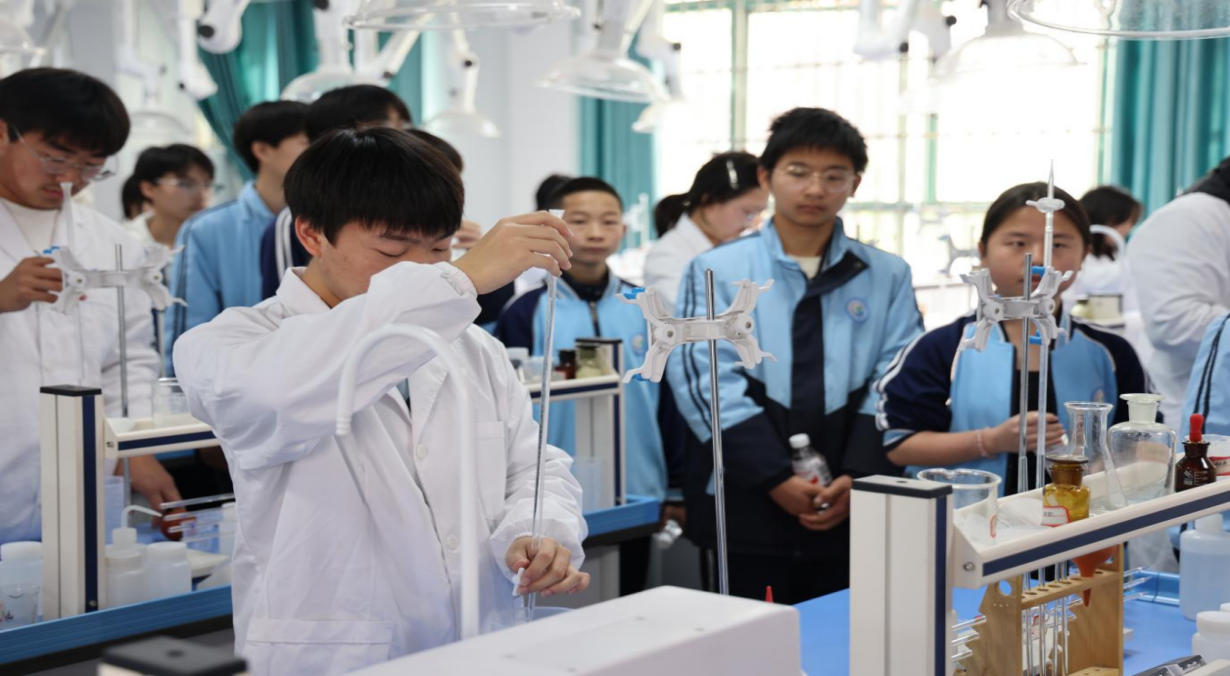
Students Undertake Practical Chemical Engineering Training
III. Outcomes and Value
(I) Significant improvement in talent-development quality
Employer satisfaction with newly hired graduates has remained consistently above 98.3 percent. Students have achieved outstanding results in skill competitions, winning two silver medals and one bronze medal in international skills competitions in the past three years. Enterprises have provided a total of 10.46 million yuan in living allowances to students and 125,000 yuan as rewards for outstanding core faculty members, effectively reinforcing students’ willingness to work locally through policy incentives.
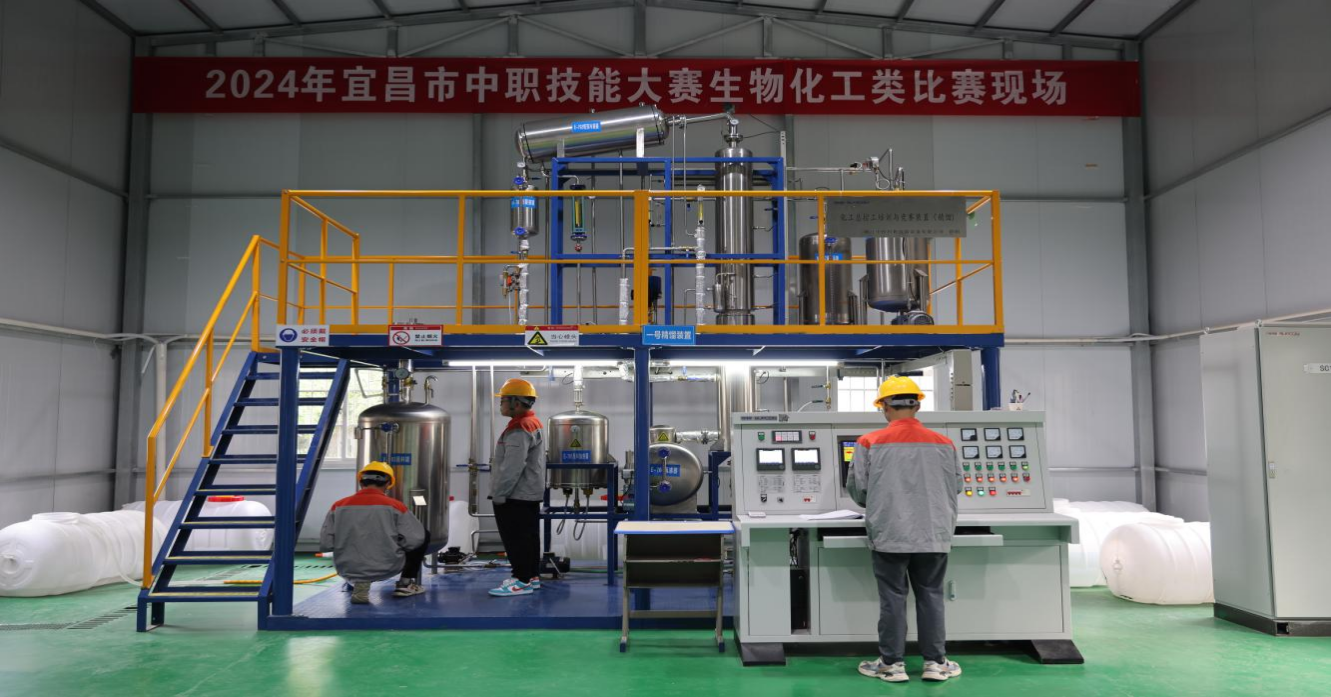
Teaching Teams Conduct Training and Skills Competitions
(II) Outstanding contributions to local industries
Since its founding, the school has delivered more than 7,000 skilled graduates from secondary vocational and junior college programs to Xingfa Group and cultivated over 3,200 high-level industry talent with junior college and bachelor’s degrees. It has conducted more than 100 employee training sessions, reaching more than 5,000 participants, and helped more than 1,000 enterprise employees improve their academic qualifications, delivering a large pool of local, long-term skilled talent for the company. With the launch of the secondary-to-higher-vocational integrated-program base, 345 students are able to pursue junior college education locally. The school has also provided training to more than 20,000 farmers and entrepreneurship training to more than 2,000 members of the public, giving full play to the social service function of county-level vocational education. The school has been approved for the Hubei Provincial Field Engineer Special Training Program and serves as a vice-chair member of multiple national industry-education integration communities. Its industry-education integration model has attracted institutions within and outside the province for observation and learning.
(III) Continued strengthening of the school’s overall capacity
The model achieves a triple-win outcome: students gain high-quality employment, enterprises obtain stable talent supply, and the county’s industries receive workforce support. This approach not only solves the common problems of insufficient training resources and superficial school-enterprise cooperation in mountainous vocational schools but also extends the reach of vocational education to drive the cultivation of skilled talent in surrounding areas, providing a Xingshan model for county-level vocational education in the mountainous counties of western Hubei to serve rural revitalization and high-quality regional economic development.
IV. Experience and Insights
(I) Taking root in local context and pursuing differentiated development
County-level vocational education must be anchored in local industries and identify its precise positioning. Mountainous secondary vocational schools should avoid pursuing large and comprehensive development at all costs; instead, they should closely follow the industrial upgrading of local leading enterprises, adjust programs to match industrial development and update curricula to fit with evolving job requirements, so as to ensure that vocational education develops alongside regional economic development.
(II) Promoting school-enterprise collaborative development and building a community of shared interests
Industry-education integration requires meaningful and substantive enterprise participation to build a community of shared interests. School-enterprise collaboration must go beyond merely signing agreements. Enterprises should be encouraged to invest in training equipment, provide student subsidies, and assign technical tutors, deeply embed enterprise resources into the entire process of enrollment, teaching, training, evaluation, and employment, and build a mutually empowering school-enterprise community with a shared future.
(III) Innovating education models and connecting the entire talent growth chain
Innovating talent-development models to support students throughout their development journey. The "Three Duals and Three Co-constructions" model should be promoted to integrate student identities, training facilities, and faculty development. Teacher development should be strengthened through on-site practice in enterprises and engagement of industry craftspeople as part-time teachers, to build a team of "dual-qualified" teachers combining full-time and part-time instructors, address school teachers’ limited industrial practice experience, and ensure that teaching is aligned with the front-line needs of industry. The school should also meet the dual needs of employment and further education, build an articulated pathway from secondary to higher vocational and undergraduate education, and broaden advancement pathways for skilled talent.
(IV) Integrating academic education and training to provide diverse support
Pursuing academic education and social training in parallel to maximize the comprehensive value of vocational education. Based in the county and serving surrounding areas, the school should focus on full-time student training, while providing skill training and academic upgrading for enterprise employees, new-type farmers, and veterans, so as to fully unleash the diverse functions of vocational education in serving industry and supporting rural development.